
What's Happening?
Mid-Week Moment: Let Justice Roll
Amos 1:1–2; 5:14–15, 21–24
There’s something deeply moving about the sound of water. The rush of a river, the rhythm of the tides, the gentle flow of a stream, water is never still for long. It moves, it shapes, it cleanses, it nourishes.
When the prophet Amos declares, “Let justice roll down like waters, and righteousness like an ever-flowing stream,” he’s calling for something just as alive and unstoppable. Justice, in God’s eyes, isn’t a one-time act or a slogan we speak when it’s easy. It’s a living movement, something that flows through our lives and into the world, carrying compassion, fairness, and mercy wherever it goes.
Amos was speaking to a people who had built beautiful places of worship. They sang, they sacrificed, they prayed, but God wasn’t pleased. “I hate, I despise your festivals,” God said, “but let justice roll down like waters.” It’s not that God rejected their worship, it’s that worship without justice had gone dry.
The river had stopped flowing.
So Amos invites us – even now – to step into that stream again, to let our faith move beyond comfort and ritual, and into action and love. Amos invites us to ask:
- Where is God’s justice needed in my community right now?
- How can I help it flow a little more freely?
- What barriers might be holding it back?
Because the thing about water is, it finds a way. Even when blocked, it seeps through cracks, reshapes the landscape, and continues its course. God’s justice does the same, and when we open our hearts, it flows through us, renewing everything it touches.
May our faith be like that stream, not stagnant or still, but alive and moving, carrying God’s love beyond all barriers, until justice truly rolls down like waters.
Let’s Pray:
God of justice and mercy, let your river flow through us. Wash away what is hardened or indifferent within us. Help us to hear the cry of those who thirst for fairness and peace. May our worship rise not only in song, but in acts of compassion, courage, and care. Let justice roll down, through our hearts, our homes, our world. AMEN

Sacred Rhythms: Seeking Good, Not Just Comfort
Amos 1:1–2; 5:14–15, 21–24
There’s a line in Amos that cuts right to the heart of what it means to live faithfully:
“Seek good and not evil, that you may live.”
It’s simple, but not easy. Because so much of life – and honestly, so much of faith – can become about comfort. We look for peace of mind, familiar routines, quiet Sundays, prayers that soothe. Those things matter…deeply. But Amos reminds us that comfort isn’t the same as faithfulness.
Faithfulness is about seeking good, not just feeling good.
To seek good means to look for it, chase after it, nurture it. It’s active, intentional, and sometimes uncomfortable. It means stepping outside the safety of the familiar to do what is right, even when it costs us something.
In Amos’s day, worship had become disconnected from life. People sang the songs and made the offerings, but ignored the injustices outside their doors. God’s response was clear: “Let justice roll down like waters, and righteousness like an ever-flowing stream.”
God didn’t reject their worship because it was wrong, but because it was incomplete. It stopped at the temple walls. Faith that stays within the walls of the sanctuary misses its calling. But when faith steps out, when it seeks good in the messy, beautiful world, then it becomes alive.
This week, take a few minutes at the end of each day to pause and ask:
- Where did I seek the good today? Maybe it was through kindness, honesty, advocacy, or simply choosing patience when it would have been easier not to.
- Where did I choose comfort instead of good? Notice without judgment. Awareness is the beginning of change.
- What good might God be inviting me to seek tomorrow?
Write your reflections in a journal or simply hold them in prayer. Over time, these small moments of reflection can begin to shape how you move through the world, turning everyday choices into holy ground.
Because the life God calls us to isn’t found in comfort. It’s found in the seeking. It’s found in the good.

Mid-Week Moment: When the Journey Is Too Much
1 Kings 19:1–18
Elijah has had enough.
After all his courage and faithfulness, after standing alone on Mount Carmel, after seeing God’s power revealed in fire, he is spent. The threats against his life push him into the wilderness, where he collapses under a broom tree and prays, “It is enough; now, O Lord, take my life.”
It’s a painfully honest moment. The great prophet, weary and broken, has nothing left to give.
And what does God do? Not a lecture. Not a demand to get up and keep going. Not disappointment. God sends an angel with food, with water, and with gentleness.
“Get up and eat, otherwise the journey will be too much for you.”
There’s something so tender about that. God meets Elijah not with judgment, but with care. God doesn’t push him past his breaking point but nourishes him back to life. Elijah is invited to rest – to sleep, to eat, to regain strength – before the next part of the journey begins.
We live in a world that doesn’t often give us that kind of grace. We push ourselves to keep going, to stay productive, to hold it all together. But sometimes, what we most need isn’t to do more, but to rest, to let God meet us in our weariness with simple, sustaining care.
When the journey feels too much, may we remember Elijah’s story. May we allow ourselves to stop beneath the broom trees of our lives to breathe, to rest, to receive the nourishment that God offers in quiet and ordinary ways.
Because sometimes faith looks like standing firm on mountaintops, and sometimes faith looks like resting under a tree, trusting that God will still find us there.
Take some time with the reading, and reflect on the following questions:
- When have you felt like Elijah: exhausted, worn out, or ready to give up?
- What does rest look like for you right now?
- Where might God be offering you nourishment through people, silence, or small acts of grace?
Let’s pray:
God of compassion, when the journey feels too much, meet us beneath the broom trees of our lives. Give us rest when we are weary, bread when we are hungry, and the courage to begin again when the time is right. Remind us that your love holds us even in our exhaustion, and that rest is not failure, it is grace. Amen.

Bible Study Cancelled for Today
Unfortunately, due to the current power outage in the area, the Bible Study for today has been cancelled.
Please share this information with others.
Due to travel and leave over the next few weeks, the next Bible Study will be held on Tuesday, November 18th.

Sacred Rhythms: God in the Margins of Noise
1 Kings 19:1-18
Elijah’s world had grown unbearably loud, not just with sound, but with fear, exhaustion, and the inner noise of despair. After doing everything he thought God had asked of him, he fled to the wilderness, overwhelmed and ready to give up.
There, beneath a broom tree and later in the shelter of a cave, Elijah encountered a God who refused to shout over the chaos.
There was a wind, but God was not in the wind.
There was an earthquake, but God was not in the earthquake.
There was a fire, but God was not in the fire.
And then, a stillness. A breath. A sound like sheer silence.
It was there, in the quiet margin after all the noise, that Elijah finally recognized God’s presence.
Our lives are often filled with the wind and fire of modern living: constant motion, constant conversation, constant consumption. Noise doesn’t always come through speakers; sometimes it’s the hum of worry, the chatter of comparison, or the relentless inner list of what we should be doing.
But like Elijah, we’re invited to step outside the whirlwind and listen for God in the quiet that remains. Not because God only speaks in silence, but because we often need stillness to hear the whisper that’s always there.
When we pause, when we notice the breath between moments, the heartbeat between demands, we begin to sense that divine presence quietly holding all things together.
This week, I invite you to make space to listen for God in the small, quiet margins of your day.
- Find Your Pause Points: Notice natural breaks in your day, waiting for the kettle to boil, sitting at a red light, walking to your car. Instead of reaching for your phone or rushing on, simply pause and take one slow, deep breath.
- Listen Inwardly: Ask gently, “God, are You here?” Don’t strain for an answer. Let the silence itself remind you that God is near.
- Carry the Stillness Forward: As the day unfolds, imagine carrying a small space of quiet within you, a calm center untouched by noise. Return to it whenever the world feels overwhelming.
By learning to meet God in these margins, we may discover that the sacred has never been absent, only waiting to be noticed.
Let’s pray:
God of quiet presence, when my life is filled with wind and fire, teach me to listen in the spaces between sound. Let Your stillness meet my restlessness, Your calm meet my chaos, and Your voice whisper through the noise, reminding me I am not alone. Amen.

Mid-week Moment: Worship Beyond Walls
1 Kings 5:1–5; 8:1–13
When Solomon dedicated the Temple, it was one of the most extraordinary moments in Israel’s story. Years of planning, labor, and longing had finally led to this: a house for God’s name. The Ark of the Covenant was carried in, the priests took their places, and a cloud filled the sanctuary until no one could stand to minister, for “the glory of the Lord filled the house of the Lord.”
It must have been breathtaking, that sense of God’s nearness, the beauty of the space, the fulfillment of promises made generations before. Yet even as Solomon stood in awe, he asked a profound question:
“But will God indeed dwell on the earth? Even heaven and the highest heaven cannot contain you, much less this house that I have built!”
Solomon understood something we sometimes forget: that no building, however grand, can contain God. The Temple was a place for God’s name, not a limit on God’s presence. It was a reminder, a focal point, a place to return to when hearts needed re-centering. But God’s presence was never confined to those walls.
We know that truth, too. We’ve felt God’s presence in sanctuaries and fellowship halls, but also in hospital rooms, around kitchen tables, by lakesides, and in quiet moments of prayer when no one else was there. Worship doesn’t depend on a building, it’s what happens when we open ourselves to God’s presence, wherever we are.
In our world today, where connection stretches far beyond physical walls, maybe this story invites us to see every place we stand as sacred ground. The classroom, the living room, the coffee shop, the hiking trail, each can become a place for God’s name when we enter it with openness and reverence.
So this week, wherever you find yourself, take a moment to pause, breathe deeply, notice where you are, and remember: God is already here.
As you breathe deep of God’s Spirit, take some time to reflect on these questions:
- Where have you recently felt God’s presence outside the church walls?
- What helps you stay centered in worship when you’re away from sacred spaces?
- How might you make your daily routines more mindful of God’s presence?
Let’s pray
God of all places and all people, you cannot be contained by walls or boundaries. Teach us to find you in the everyday spaces of our lives: in work and rest, in friendship and quiet, in laughter and tears. Wherever we are, let your name be known, and may our lives become a living sanctuary of your presence. AMEN
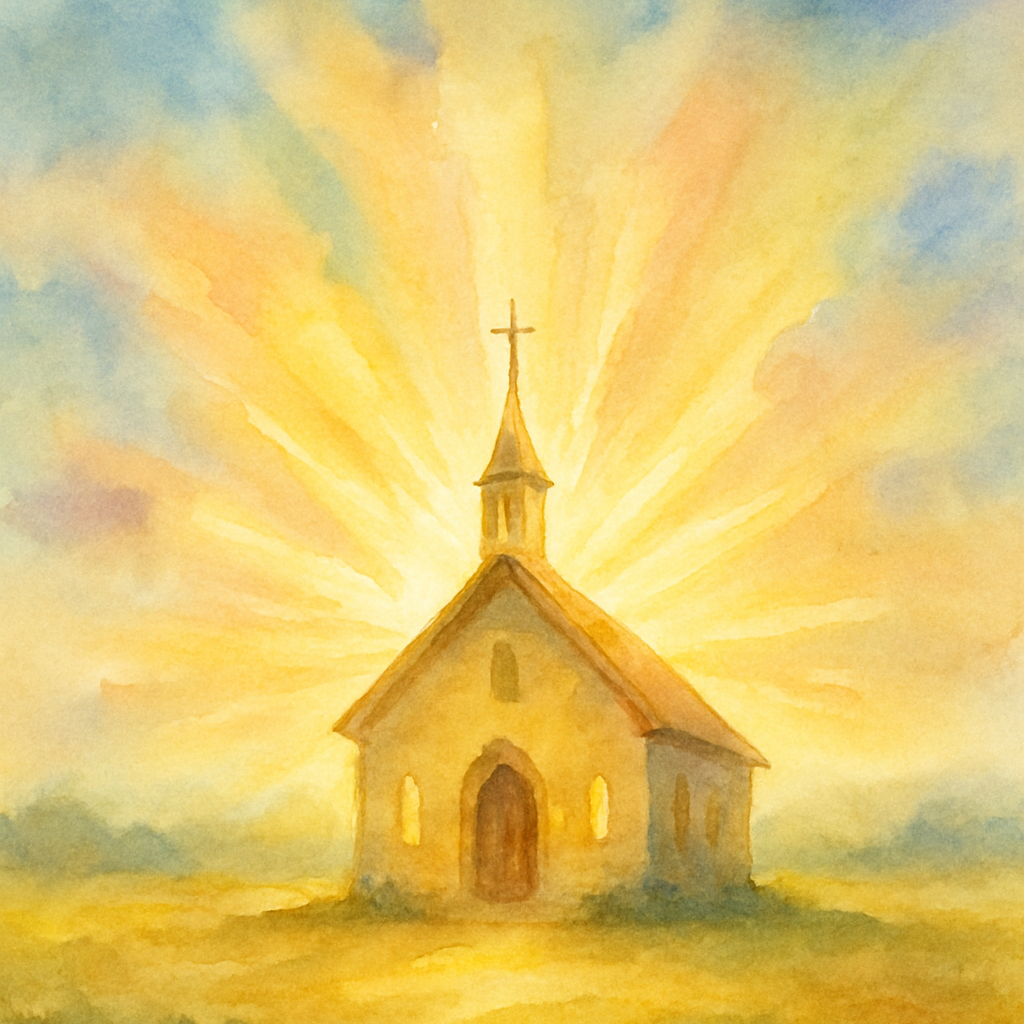
Sacred Rhythms: Carrying the Ark Within
1 Kings 5:1–5; 8:1–13
When the Ark of the Covenant was brought into Solomon’s newly built temple, the people gathered in wonder. The air must have been thick with expectation. As the Ark was placed in the inner sanctuary, the most sacred space, a cloud filled the temple, a sign of God’s living presence dwelling among them.
The people didn’t just see a building completed. They witnessed a promise fulfilled: “My dwelling place shall be among them.”
For generations, the Ark represented God’s nearness, the place where heaven touched earth. It held the tablets of the covenant, reminders of God’s faithfulness and the people’s call to live as God’s own.
But the story doesn’t end in the temple. Over time, the people learned that God could not be confined to walls of cedar or gold. The holy presence that once filled a sanctuary now fills us.
Through Christ and the Spirit, we have become living temples, carriers of the sacred presence that once hovered above the Ark. God’s dwelling place has moved from the grandeur of a temple to the quiet chambers of our hearts.
To carry the Ark within is to live aware that God is closer than our own breath. It means that every step, every word, every act of compassion becomes a sacred procession.
This week, practice noticing the holy presence that dwells within you and moves through you.
- Begin the Day with Centering:
- When you wake, place your hand over your heart and whisper, “God, You dwell here.”
- Let that awareness shape your first few breaths.
- Pause and Remember:
- Throughout your day, stop for a brief moment – between meetings, while waiting in line, during a quiet pause – and return to that truth: “The Holy One is here.”
- End in Gratitude:
- Each evening, reflect on one moment when you felt particularly aware of God’s presence, or even when you longed to feel it.
- Offer thanks for that awareness, however fleeting.
Over time, these small pauses can awaken a deep sense of companionship with God, not a distant deity, but a Presence that rests and moves within you.
Let’s pray:
God of Presence, You not only dwell in temples made by human hands, but in hearts made alive by Your Spirit. Help me to carry Your presence gently, to be aware of the sacred in myself and in others, and to live as a vessel of Your love in the world. AMEN

Mid-Week Moment: God’s Quiet Work
1 Samuel 16:1-13
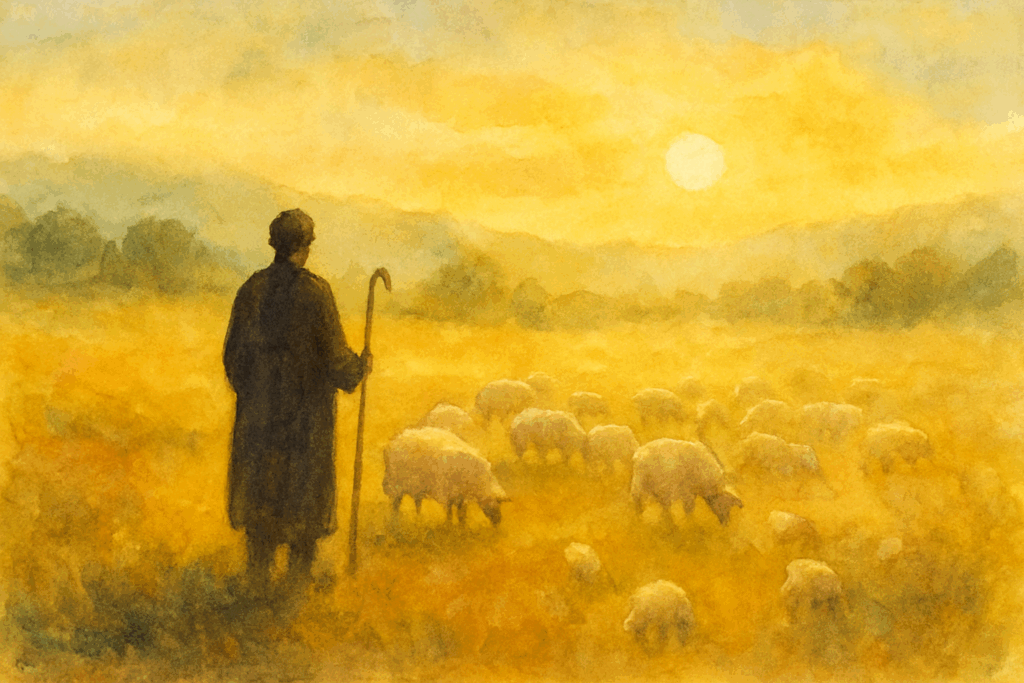
When God sent Samuel to Bethlehem, it didn’t look like a moment that would change history. It began with a quiet journey, a simple visit to a small town, and a family gathering that was almost an afterthought. There were no crowds or fanfare. Just a prophet, a worried heart, and a family of sons lined up in a modest home.
As Samuel looked over Jesse’s sons, he saw strength, confidence, and kingly appearance, but God whispered, “Do not look on his appearance or on the height of his stature (…) for the Lord does not see as mortals see.”
And when the youngest – the one left out in the field with the sheep – was finally brought in, God said, “Rise and anoint him; for this is the one.”
There’s something sacred about that scene. God’s great work doesn’t always unfold in the halls of power or in the moments we think are important. More often, it happens quietly, in the places we overlook, in the people we underestimate, and in the ordinary rhythms of our daily lives.
Maybe God’s quiet work is happening in you right now, not in the grand plans or public achievements, but in the quiet patience you’re learning, the kindness you offer without recognition, or the small acts of faith that no one sees.
The story of David’s anointing reminds us that holiness can grow in simple soil, in the fields of everyday life. God’s call finds us where we are, doing what we do, and gently invites us to see that even the most ordinary moments can become sacred ground.
As you continue through this week, maybe living into the Sacred Rhythm from Monday, here are some questions to help you reflect.
- Where might God be quietly at work in your daily routines?
- Are there “fields” in your life that you’ve overlooked, places where holiness might already be blooming?
- How can you open your eyes to see the sacred in the ordinary this week?
Let’s pray:
God of quiet callings and gentle nudges, help us to see the holiness that surrounds us, in the people we meet, in the work we do, and in the ordinary moments we often rush past. Open our eyes to your quiet work among us, and help us trust that even in the smallest things, your love is at work renewing the world. AMEN
Bible Study Cancelled Today
Tuesday, October 14th, 2025
Today’s Bible Study has been cancelled so that we may come together as a community to honour and remember Joan Thomas.
Her memorial service will be held today (Tuesday, October 14th) at 1:00 p.m. at York Funeral Home.
We invite everyone to join in support of Joan’s family and in gratitude for the many ways her life touched ours.

Sacred Rhythms: Seeing with God’s Eyes
1 Samuel 16:1–13
When Samuel went to anoint the next king of Israel, he was sure he knew what to look for. Strong shoulders. A confident presence. The kind of person who looked like a leader. But as each of Jesse’s sons passed by, God’s quiet voice whispered, “Not this one.”
And then came David: young, overlooked, still smelling of the fields. It’s then that God reminds Samuel, “The Lord does not see as mortals see; they look on the outward appearance, but the Lord looks on the heart.”
How often do we get caught in that same trap, judging by appearances, first impressions, or our own assumptions? But this story invites us into a different rhythm: a way of seeing with God’s eyes.
To see with God’s eyes is to slow down. It’s to pause long enough to look beneath the surface, not just of others, but also of ourselves.
God sees potential where we see limitation.
God sees courage where we see fear.
God sees beauty where we might see brokenness.
This practice isn’t easy; it requires patience, humility, and compassion. But each time we look with God’s eyes – when we see the heart rather than the exterior – we participate in God’s healing vision for the world.
Each day this week, try this simple practice of holy seeing:
- Pause: Take a few slow breaths and ask, “God, help me see as You see.”
- Notice: As you interact with others (or even think of someone from afar), notice your first impressions. Then, gently ask yourself, “What might God see here that I’ve overlooked?”
- Reflect: At day’s end, write or pray about one moment when your perspective shifted, even slightly.
You might find that God opens your heart to a person, a situation, or even a part of yourself that you hadn’t truly seen before.
Let’s pray:
God who sees beyond appearances, teach me to look with compassion. To be curious instead of judgmental. Where I see difference, help me to see Your image. Where I see weakness, help me to see Your strength at work. Where I see nothing but the surface, open my heart to the depth of Your love. Let me see, even for a moment, as You see. AMEN

46 Main Street
Fredericton, New Brunswick
E3A 1C1
506-458-9452 (Church Office)
506-262-2150 (Rev. Richard's Cell)
Office Hours
Tuesday - Friday 9am to 2pm
Rev. Richard's Drop-in Office Hours
Tuesday & Thursday 10:00AM to 12:30 PM
We dedicate the revitalization of our online presence to the memory of the late Mary Hicks. We are grateful for Mary’s personal estate bequest in support of the work and mission of Nashwaaksis United Church.