
What's Happening?
Mid-Week Moment: Led, Not Driven
John 10:1-21
There is a kind of pressure that many of us carry without even noticing. The pressure to keep up, to do more, to be more productive, to prove ourselves, to keep moving, even when we are tired.
Life can begin to feel less like a journey and more like something is chasing us. And when that happens, it becomes difficult to remember what it feels like to move through life with peace.
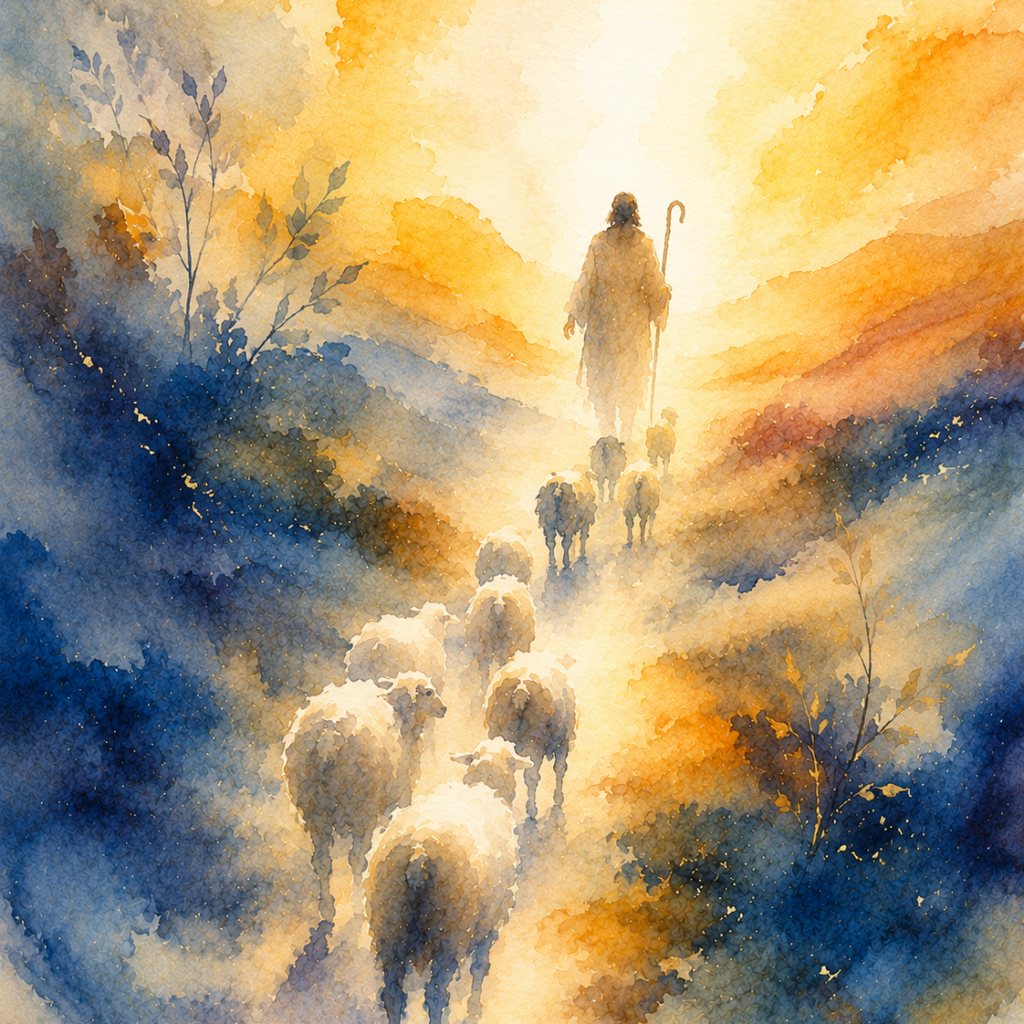
In John 10, Jesus offers a very different image. He speaks of a shepherd. They don’t pushes from behind. They don’t drive the flock with fear or force.
Instead, Jesus says the shepherd goes ahead of the sheep, and they follow because they know his voice. That image offers a different perspective on how we live.. Because there is a difference between being driven and being led.
To be driven is to feel constant urgency, to believe that stopping means falling behind, to feel like our value depends on how much we accomplish.
But to be led is different. To be led is to trust that we do not have to know the entire path before taking the next step. To be led is to move at the pace of relationship rather than pressure. To be led is to remember that our worth is not something we earn.
The voice of Christ does not shame. It does not demand perfection. It does not rush us.
It calls. It invites. It goes ahead.
Of course, following does not mean life becomes easy. Shepherds still lead through valleys and uncertain places. But the difference is this:
We do not walk alone.
And perhaps that is one of the invitations of faith, to pause long enough to ask: What voice am I following? Is it the voice of fear? Expectation? Comparison? Or is it the voice of the one who knows my name and walks ahead of me?
Maybe this week, instead of asking: “What do I have to do next?” we should ask: “Where am I being called, invited, led?”
Take some time with the reading, and when you do, sit with these reflective questions:
- Where in your life do you feel driven right now?
- What voices most often shape your decisions and your sense of worth?
- When have you experienced a sense of being gently led rather than pressured?
- What might change if you trusted that you do not need to carry everything on your own?
Let’s pray:
Good Shepherd, when life feels rushed and heavy, slow our hearts. Help us to recognize your voice among all the noise and pressure around us. Teach us to trust your leading, even when we cannot see the whole path. Remind us that we do not need to prove our worth, earn your love, or carry every burden alone. Lead us in your peace, one step at a time. AMEN
Sacred Rhythms: The Shepherd’s Voice
John 10:1-21
This coming Sunday we are at Nashwaaksis Baptist Church with our ecumenical kindred, so we are taking a break from the journey through Paul’s letters. This week, we open ourselves to the gospel of John, chapter 10.
We live in a world full of voices. There are voices that tell us to hurry. Voices that tell us we are not enough. Voices that demand our attention, pull us in different directions, and leave us wondering what truly matters.
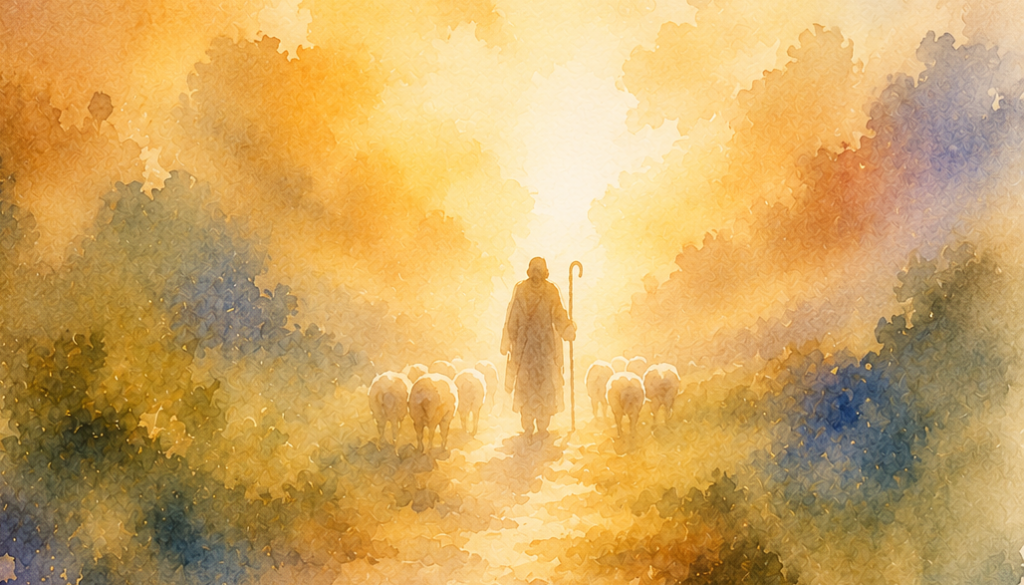
In John 10, Jesus offers a different image. He describes himself as the shepherd whose sheep know his voice, not because the shepherd shouts louder than everything else, and not because the path is always obvious, but because relationship creates recognition.
The sheep know the shepherd because they have spent time with the shepherd.
That can feel difficult in a noisy world. We often expect God’s voice to be obvious and come with complete clarity. But more often, the voice of Christ comes quietly, through peace, invitation, compassion, wisdom, or a gentle nudge toward life.
Listening for the Shepherd’s voice is less about finding perfect certainty and more about creating space to become familiar with the One who leads us.
This week, set aside five quiet minutes each day to practice listening. Find a comfortable place and begin with a few slow breaths. Then pray simply:
“Good Shepherd, what do you want me to hear today?”
After praying, sit quietly.
There is no need to force an answer or fill the silence. Simply notice:
- what thoughts arise?
- what feelings surface?
- what words, images, or invitations gently come to mind?
If your attention drifts, gently return to your breath and the prayer. When your time is finished, ask yourself:
Did anything I noticed feel like it led toward peace, compassion, hope, or life?
You may not receive a dramatic answer, and that’s okay. This practice is not about producing certainty. It is about becoming more attentive to the voice of Christ and learning to recognize the ways God is already speaking in your life. Over time, familiarity grows. And sometimes the Shepherd’s voice becomes clearer simply because we have learned to listen.
Let’s pray:
Good Shepherd, in the noise of our lives, help us slow down and listen. Teach us to recognize your voice, the voice that leads toward love, peace, and life. Give us quiet hearts, open ears, and the courage to follow where you lead. AMEN
Prayer Pause: Held in Love
This week’s prayer is for those who are wrestling with loss. Whether that loss is fresh, or grief that has carried through the years, know that you are held in love and prayer today.
Let’s pray:
God who stays, today we pause and bring before you those who are carrying grief. Some losses are fresh and sharp. Some have softened with time but still ache in unexpected moments. Some losses have names we speak often. Others we carry quietly in places no one else can see.
You know them all. Be close to those who are mourning, those grieving someone they love, those grieving relationships that have changed, those grieving health, hopes, certainty, or seasons of life that cannot be reclaimed. Hold those who feel lonely in their sorrow. Sit with those who cannot find words. Strengthen those who are tired of being strong.
And remind us, God, that the pain we carry is only so deep because our love ran deep. What hurts now matters because someone mattered. What aches now mattered because love was real.
Help us not to rush ourselves or others toward healing, but to trust that you meet us in every stage, in tears and silence, in remembering and releasing, in questions and in hope.
Teach us to be gentle with one another, to become companions who carry light into heavy places. And when grief feels too large, hold us in the promise that love is never wasted, and no sorrow is carried alone.
With tenderness and hope, we place ourselves and one another into your care.
AMEN

Mid-Week Moment: Living Awake
1 Thessalonians 5:1–11
There are seasons of life when we realize we have been moving more by habit than by attention. The alarm goes off. The day begins. Tasks are completed. Conversations happen. And before we know it, another week has passed.
Life can become something we move through rather than something we inhabit.
In 1 Thessalonians 5, Paul writes to a community that is anxious about the future. People want certainty. They want answers. They want to know what comes next.
But Paul does something interesting. Rather than encouraging them to focus on predicting the future, he turns their attention to the present. He invites them to stay awake. Not anxious, or fearful, but awake.
Awake to the life they are living now.
That kind of wakefulness is not about constantly striving or never resting. It is a spiritual attentiveness. A willingness to notice.
- To notice where beauty still appears.
- To notice the people around us.
- To notice where God may already be moving in ways we did not expect.
- To notice what is growing within us.
So much of life can be spent waiting for later. Later, when life slows down. Later, when things become easier. Later, when we finally feel settled or certain.
But scripture reminds us that God is not waiting for later. God meets us here. In ordinary mornings, in difficult conversations, in unexpected moments of laughter, in acts of kindness that might otherwise go unnoticed.
Paul describes believers as “children of light.” Perhaps that means more than simply believing the right things. Perhaps it means learning to live with open eyes. To resist drifting through life asleep, to become people who pay attention; people who notice wonder, remain open to change, who keep making room for hope.
And maybe living awake does not require dramatic change for us. Maybe it begins with something as simple as slowing down long enough to ask:
What am I being invited to notice today?
Take some time to sit with the reading and then reflect on the following questions:
- Where in your life do you feel most on autopilot right now?
- When was the last time you felt fully present to a moment?
- What signs of beauty, hope, or grace have you overlooked recently?
- What might God be inviting you to notice this week?
Let’s pray:
God of light, so often we move too quickly through our days. Wake us gently. Open our eyes to your presence in ordinary moments. Help us to notice beauty, to make space for wonder, and to remain open to the ways you are still shaping and inviting us. Teach us not to rush past this day, but to receive it as a gift. Help us live awake. AMEN

Sacred Rythms: Hope as a Daily Practice
1 Thessalonians 5:1-11
Hope can sometimes feel like something we either have or we don’t. We wait for hopeful circumstances. We wait to feel hopeful. We imagine hope arriving once things become clearer, easier, or more certain.
But in his letter to the Thessalonians, Paul speaks about hope differently. He encourages the community to put on hope. Like clothing. Like something chosen. Like something we carry into ordinary days.
This isn’t a call to ignore hardship or pretend everything is fine. Paul writes to people living in uncertainty and reminds them that hope is not wishful thinking, it is the confidence that God is present, even when we cannot yet see the whole path ahead.
Hope is something we can practice. Not by forcing optimism, but by learning to notice the signs that grace, love, and life are still moving among us. Sometimes hope begins by paying attention.
This week, try practicing hope intentionally. At the end of each day, set aside a quiet moment and ask yourself:
- Where did I notice hope today?
Try to write down one small thing. It does not need to be dramatic.
Perhaps it was:
- a meaningful conversation
- a moment of laughter
- someone showing kindness
- a quiet moment of peace
- a difficult task completed
- a glimpse of beauty in creation
- simply making it through the day
Before you write, take a slow breath and pray:
“God, open my eyes to the hope already present around me.”
Over time, this practice becomes less about searching for extraordinary moments and more about recognizing that God is often present in ordinary ones.
The goal is not to deny difficulty. The goal is to train our hearts to notice that even in uncertain seasons, hope continues to appear. One small sign at a time.
Let’s pray:
God of hope, when life feels uncertain or overwhelming, help us remember that your presence is not dependent on perfect circumstances. Open our eyes to signs of life, grace, and goodness around us. Teach us to notice hope in ordinary moments, to trust that you are still at work, and to carry that hope into the lives of others. Clothe us in faith, love, and hope, and remind us each day that your light continues to shine. AMEN

Prayer Pause
1 Thessalonians 4:1-12
For our first of many Prayer Pause posts, we are beginning in a great place: love! As we begin our journey through Pride month, may the Holy Spirit inspire us to grow in love, understanding, and affirmation!
Let’s pray:
God of abundant and ever-expanding love, in this season of Pride, we pause and remember that your love is never small, never scarce, and never finished.
Through the words of Paul, you invite us to love more and more, to grow beyond imaginary boundaries, to open our hearts wider, and to become communities where people are seen, valued, and celebrated. Teach us a love that listens before speaking, a love that welcomes without condition, a love that honours the sacred worth carried in every person.
Especially today, we pray for all who have known exclusion instead of belonging, silence or indifference instead of affirmation, judgment instead of grace. Wrap your beloved children in courage, joy, safety, and deep assurance that they are held in your care.
We pray for LGBTQIA2S+ people and communities, for celebration where there has been sorrow, for healing where there has been hurt, for freedom where there has been fear, and for spaces where people can live openly, authentically, and fully.
Continue shaping your Church into a place where love grows more generous, more compassionate, more courageous, more Christ-like. Help us to move beyond words into action: to stand beside one another, to celebrate one another, to learn from one another, and to reflect the expansive welcome of Christ.
And where we discover places in ourselves that still need growing, meet us there with grace.
May our lives proclaim what your love has always declared: that every person is worthy of dignity, every person is created in wonder, and every person is invited into the unfolding story of your love.
Teach us, O God, to love more and more. AMEN

Mid-Week Moment: Love More and More
1 Thessalonians 4:1-12
There is something encouraging in Paul’s words to the Thessalonians. He does not begin by criticizing them. He does not tell them they have failed or fallen short. Instead, he acknowledges the love they are already showing one another.
And then he offers a simple instruction:
“Do so more and more.”
It’s a gentle invitation to keep up the good work. Love more and more. Not because you haven’t loved enough. Not because you’ve gotten everything wrong. But because love is always growing.
Most of us know that growth doesn’t come all at once. It happens in ordinary moments. In choosing patience when irritation would be easier. In extending grace when someone disappoints us. In checking in on a friend. In listening a little more carefully. In offering kindness when no one is expecting it.
Love grows not through grand gestures alone, but through countless small decisions made day after day. Perhaps that is why love is both beautiful and challenging. It is never really finished. There is always another opportunity to be a little more compassionate. A little more understanding. A little more generous with our time, attention, and care.
And yet, this invitation should not feel overwhelming. Paul isn’t asking the Thessalonians to become entirely different people overnight. He is simply encouraging them to keep growing in the direction they are already heading. I think there is grace in that.
God does not demand perfection from us. Instead, God patiently invites us forward. One step. One conversation. One act of kindness. One day at a time.
Maybe that’s what spiritual growth often looks like—not becoming someone new all at once, but allowing love to expand its reach within us little by little.
And perhaps this week, that’s enough. Simply to ask:
“How might love grow in me today?”
Take some time with the reading this week and reflect on the following questions:
- Who has shown you a love that grew steadily over time rather than through grand gestures?
- Where in your life is God inviting you to grow in patience, compassion, or understanding?
- What small act of love could you offer this week?
- How would your day be different if you began it by asking, “How might love grow in me today?”
Let’s pray:
Loving God, help us to grow through grace. Teach us to love a little more deeply, listen a little more carefully, and care a little more generously. May your love take root in our hearts and continue to grow, little by little, day by day. AMEN

Sacred Rhythms: One Small Step
1 Thessalonians 4:1-12
Sometimes we imagine spiritual growth as something dramatic. We picture profound moments of insight, life-changing experiences, or sudden transformations. While those moments certainly happen, more often than not, faith grows slowly, one small step at a time.
In his letter to the Thessalonians, Paul celebrates the love they already share and then encourages them to continue growing:
“You do indeed love all the brothers and sisters throughout Macedonia. But we urge you, beloved, to do so more and more.”
There is something wonderfully hopeful about those words. Paul doesn’t expect perfection. He doesn’t tell them they haven’t done enough. Instead, he invites them to keep growing, to take the next step, however small it may be.
The same invitation is extended to us.
Love isn’t something we achieve once and for all. It is something we practice. Day by day, choice by choice, we learn to become more patient, more compassionate, more generous, and more attentive to the needs of others. And often, that growth begins with one simple act.
This week, choose one small act of love to practice each day. Don’t worry about doing something extraordinary. Instead, look for simple opportunities to reflect God’s love in ordinary ways.
You might:
- send a message of encouragement
- make time for a meaningful conversation
- offer help to someone who needs it
- extend patience when frustration would be easier
- express gratitude to someone who often goes unnoticed
At the beginning of each day, take a moment to pray:
“God, show me one small step of love I can take today.”
Then pay attention. You may find that opportunities arise naturally: a conversation, a need, a chance to offer kindness. At the end of the day, reflect on where you were able to share love and where you noticed love being shared with you. The goal is not to accomplish something impressive. The goal is simply to grow, little by little, into the love Christ calls us to embody. Because small steps, taken consistently, can shape a life.
Let’s pray
Loving God, thank you for your patience with us as we grow in faith and love. Help us not to become discouraged by how far we still have to go, but to trust that you are at work within us, shaping us day by day. Open our eyes to the opportunities around us to share kindness, compassion, and grace. Show us the small steps of love we can take today, and give us the courage to take them. May our lives reflect your love in both ordinary and extraordinary moments, and may we continue to grow in faith, hope, and love. AMEN

Mid-Week Moment: The Quiet Witness of an Ordinary Life
1 Thessalonians 1:2-10
Most of us do not think of our lives as particularly remarkable. We move through ordinary routines: work, errands, conversations, caring for family, checking in on friends, showing up for responsibilities that rarely make headlines or attract attention.
And yet, in his letter to the Thessalonians, Paul speaks as though these ordinary believers are shining examples of faith. Not because they were famous. Not because they were powerful. But because something about the way they lived reflected hope, love, and faithfulness to others.
Their lives spoke.
Sometimes we imagine that making a difference requires grand gestures or extraordinary achievements. But often, the deepest impact comes through smaller things repeated over time.
- A person who listens with compassion.
- Someone who remains kind in difficult moments.
- A steady presence during seasons of grief or uncertainty.
- A quiet act of generosity no one else notices.
These moments may seem small to us. We may even forget them quickly. But they have a way of shaping the lives around us.
Paul reminds the Thessalonians that their faith had “sounded forth.” In other words, the way they lived became a witness long before they ever said a word. The same may be true for us.
We may never fully know how much encouragement a gentle word offered someone. We may never realize how deeply another person was affected by patience, kindness, or compassion shown during an ordinary day.
But quiet faithfulness matters.
In a world that often celebrates loudness, success, and recognition, the gospel reminds us that God frequently works through quieter things: through ordinary people quietly reflecting love in everyday life.
Perhaps holiness is not always found in dramatic moments. Perhaps sometimes it is found in simply continuing to show up with grace.
Take some time to sit with the reading, and reflect on the following questions:
- Who has quietly shaped your life through their kindness, steadiness, or compassion?
- What ordinary acts of care or encouragement have meant the most to you?
- How might your daily interactions become small expressions of hope or grace for others?
- Are there ways God may already be working through your life that you have overlooked?
Let’s pray:
Loving God, thank you for the quiet ways your love moves through ordinary lives. Help us not to underestimate small acts of kindness, compassion, and faithfulness. Shape us into people who reflect your grace in the everyday moments of life. When we feel unnoticed or insignificant, remind us that even small acts of love can bring light and hope to others. May our lives quietly bear witness to your presence in the world. AMEN

Sacred Rhythms: Practicing Encouragement
1 Thessalonians 1:2-10
Paul begins his letter to the Thessalonians with gratitude.
“We always give thanks to God for all of you…”
Before offering instruction or teaching, Paul pauses to name the goodness he sees in this community. He recognizes their faith, their love, and the hope they continue to carry. His words are more than polite compliments, they are encouragement that strengthens and uplifts the people hearing them.
Encouragement is a gift we often underestimate.
- A kind word.
- A sincere thank you.
- A reminder that someone’s efforts matter.
These small moments can bring light into difficult days. They can restore hope, deepen connection, and remind people they are not alone.
As followers of Christ, part of our calling is not only to receive grace, but to reflect it into the lives of others. One of the simplest ways we do that is through encouragement. When we intentionally speak words of kindness, gratitude, and hope, we begin to mirror the heart of Christ in the world.
This week, try practicing encouragement intentionally.
Each day, choose one person to encourage in a genuine and specific way.
You might:
- send a thoughtful message
- thank someone for their kindness
- acknowledge someone’s hard work
- speak words of hope to someone who is struggling
- simply let someone know they matter to you
As you do, try to be specific. Rather than general praise, name something meaningful you notice in them.
Before you begin, you might pray:
“Christ, help me become a source of encouragement and grace.”
At the end of the day, take a quiet moment to reflect:
- How did offering encouragement affect my spirit?
- How might small words of kindness shape the people around me?
Encouragement may seem like a small thing, but often it becomes a quiet way the love of Christ reaches another person.
Let’s pray:
Loving God, thank you for the people who have spoken hope, kindness, and encouragement into our lives. Teach us to do the same for others. Help us to notice the goodness around us and give us the courage to name it with grace and sincerity. May our words bring comfort where there is discouragement, hope where there is weariness, and light where there is heaviness. Shape us into people who reflect your love through simple acts of encouragement and care. AMEN

46 Main Street
Fredericton, New Brunswick
E3A 1C1
506-458-9452 (Church Office)
506-262-2150 (Rev. Richard's Cell)
Office Hours
Tuesday - Friday 9am to 2pm
Rev. Richard's Drop-in Office Hours
Tuesday & Thursday 10:00AM to 12:30 PM
We dedicate the revitalization of our online presence to the memory of the late Mary Hicks. We are grateful for Mary’s personal estate bequest in support of the work and mission of Nashwaaksis United Church.