
What's Happening?
Mid-Week Moment: Disruptive Spirit
Acts 2:1–21
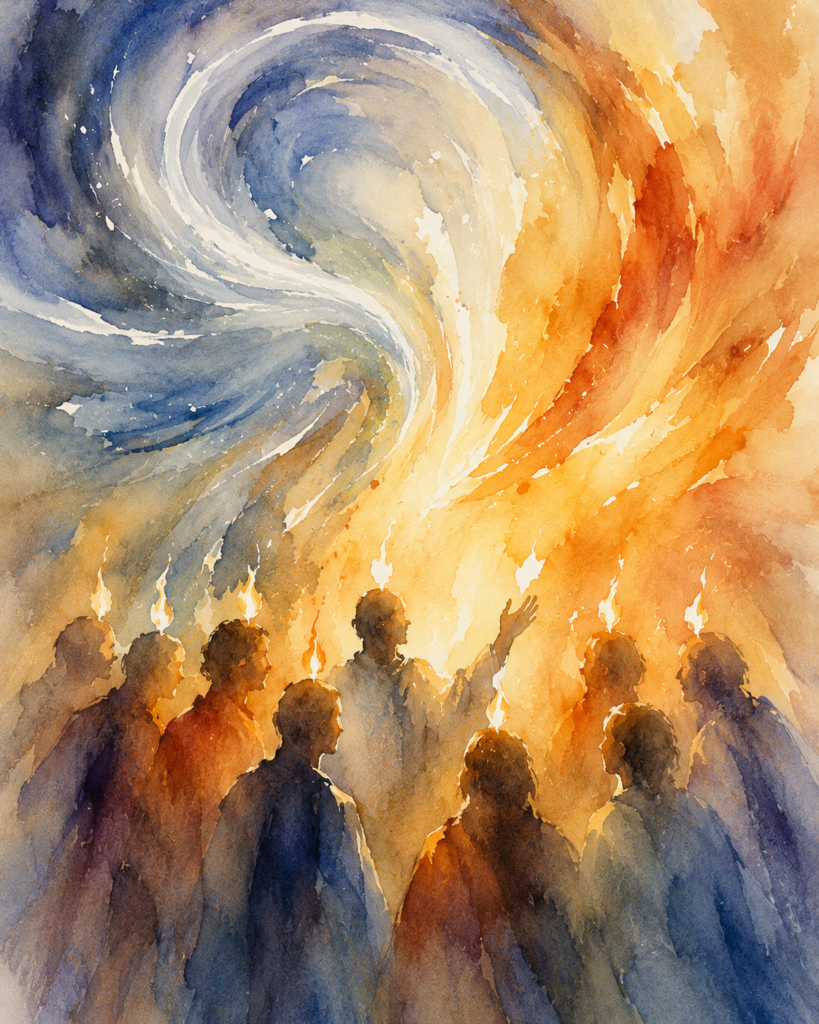
Pentecost does not begin quietly. There is wind, noise, fire, and confusion. The Spirit arrives not as a gentle whisper this time, but as something impossible to ignore. And that is part of what makes Pentecost both inspiring and uncomfortable.
Because while we often long for the presence of God, we do not always long for disruption. We like certainty, predictability, familiar rhythms. We prefer faith that fits neatly into the patterns we already know. Yet throughout scripture, the Spirit rarely leaves people unchanged.
At Pentecost, fearful disciples step out into the open. Barriers of language and culture begin to fall away. People who expected God to move in familiar ways suddenly discover something new unfolding before them.
The Spirit disrupts their expectations. And the Spirit still does this today.
Sometimes the Holy Spirit comforts us. But sometimes the Spirit unsettles us too, nudging us toward growth, compassion, courage, or change we would not have chosen on our own.
There are moments when the Spirit exposes assumptions we have carried for too long. It brings us to moments when we begin seeing people differently, moments when we feel drawn toward forgiveness, deeper honesty, or a new direction entirely.
Transformation is rarely comfortable. Like wind, the Spirit cannot be contained. It moves. It stirs. It calls us beyond old fears and familiar boundaries.
And yet, this disruption is not chaos for its own sake. The Spirit disrupts in order to create something new.
- New understanding.
- New courage.
- New life.
Pentecost reminds us that faith is not simply about preserving what has always been. It is also about remaining open to the living movement of God who is still speaking, still stirring, still transforming hearts today.
Part of our spiritual life is learning not only to seek God’s comfort, but also to welcome God’s holy disruption, to ask “God, give me peace,” but also, “God, show me where I still need to grow.”
Take a few moments this week to sit with the reading, and reflect on the following questions.
- When have you experienced a moment that challenged or changed your understanding of faith, yourself, or others?
- Are there places in your life where you resist change or cling tightly to certainty?
- What might it mean to remain open to the movement of the Spirit, even when it feels uncomfortable?
- Where do you sense God inviting you toward growth, courage, or transformation right now?
Let’s pray:
Holy Spirit, you move like wind through the locked rooms of our hearts. You comfort us, you stir us. You call us beyond fear, beyond complacency, beyond the limits we place around ourselves and others. When we resist change, give us courage. When we cling too tightly to certainty, give us openness. When transformation feels uncomfortable, remind us that you are always working toward life, grace, and renewal. Breathe through us again, that we may become people shaped by your love, your wisdom, and your restless hope for the world. AMEN
Sacred Rhythms: Breathing Prayer
Acts 2:1-21
At Pentecost, the Spirit arrives like a rushing wind. It fills the house. It stirs the hearts of the disciples. It moves people from fear into courage, from silence into joyful proclamation.
In scripture, breath and spirit are deeply connected. The same breath that fills our lungs is also a reminder of God’s life moving within us. And yet, in the middle of busy schedules, worries, and constant noise, we often forget to breathe deeply enough to notice God’s presence.
Pentecost reminds us that the Spirit is not distant. The Spirit is as near as our next breath. Sometimes the simplest prayers are the ones we breathe.
This week, try practicing a simple breathing prayer.
Find a quiet moment during your day. Sit comfortably and take a slow, gentle breath in. As you breathe in, quietly pray:
“Come, Holy Spirit…”
Then slowly breathe out and pray:
“…renew my heart.”
Continue for several breaths, letting the words settle gently within you.
You do not need to force anything or empty your mind completely. Simply breathe and pray.
You might practice this:
- first thing in the morning
- during a stressful moment
- while walking
- before bed
- or anytime you need to pause and reconnect with God’s presence
Over time, even a few slow breaths can become a reminder that the Spirit of God is already near, moving, renewing, and giving life.
Let’s pray:
Come, Holy Spirit, Breath of God, move within us. In the noise of our lives, teach us to pause and breathe deeply of your presence. Renew our hearts when we are weary, calm us when we are anxious, and awaken us to the life you are stirring within us. May every breath remind us that we are held in your love and filled with your Spirit. AMEN
Mid-Week Moment: The Shape of Love
Philippians 2:1-13
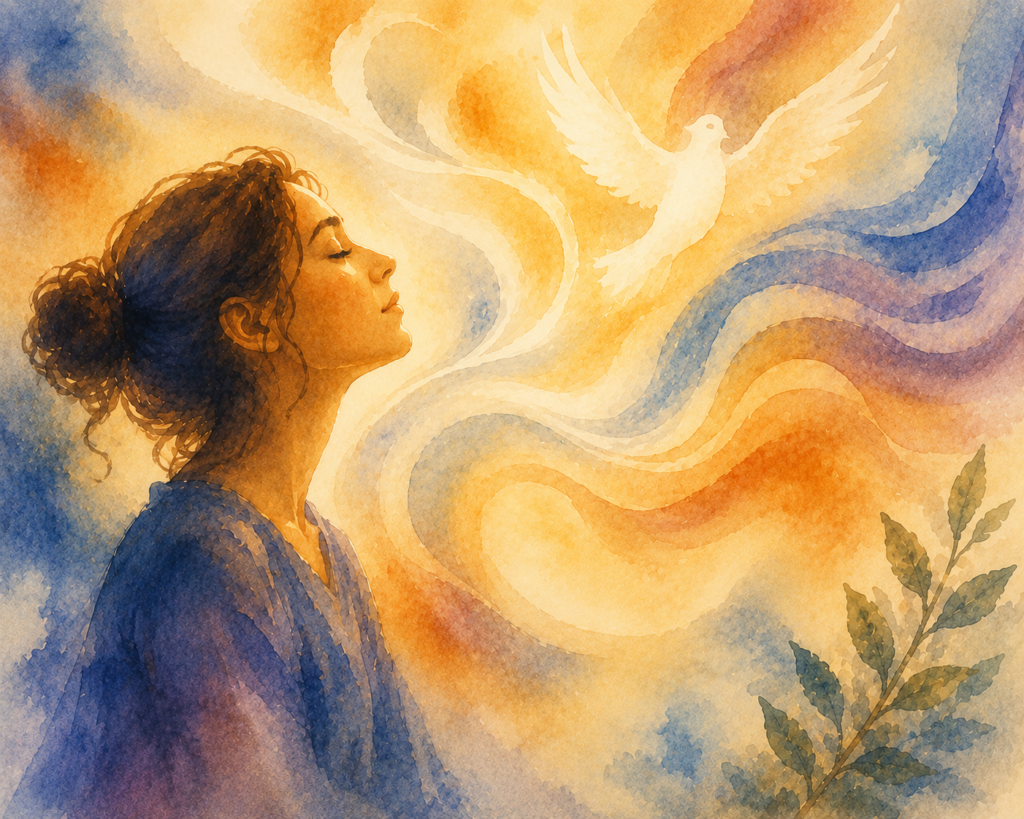
We often associate power with strength, influence, or the ability to rise above others. But in Philippians 2, Paul paints a very different picture of power. He points to Christ.
Rather than grasping for status or holding tightly to privilege, Jesus chooses humility. He enters fully into human life, not from a distance, but from within it. He walks alongside ordinary people. He draws near to those who are hurting. He embraces vulnerability, compassion, and self-giving love. It is a vision of God that can still surprise us.
Again and again, we expect greatness to appear in dramatic ways. Yet the life of Christ reveals a different kind of greatness altogether: not domination, but love. Not self-protection, but openness. Not lifting himself above others, but drawing near. And perhaps that is why this passage continues to speak so deeply to the human heart.
Because many of us grow weary of a world shaped by competition, ego, and the pressure to prove ourselves. We long for something gentler, something more compassionate, something rooted in grace rather than performance.
Philippians reminds us that the heart of God is not found in pride or power over others, but in love willing to bend low. We do not need to earn our worth through constant striving. We do not need to be the loudest voice in the room. The way of Christ invites us into a different rhythm, one shaped by humility, mercy, and love, because love makes room for others to flourish alongside us.
Perhaps this week’s invitation is simply to pause and reflect on the shape our lives are taking. Are we becoming more compassionate? More gracious? More willing to draw near to others with gentleness and care?
Because slowly, quietly, often in ways we barely notice, the love of Christ reshapes us from the inside out.
Take some time this week to sit with the reading and reflect on the following questions:
- When you think of “strength” or “power,” what images come to mind?
- How does the example of Christ in Philippians 2 challenge or reshape those ideas?
- Where in your life do you feel pressure to prove yourself or hold everything together?
- What might it mean to embrace a more grace-filled way of living?
Let’s pray:
Christ of humility and grace, you revealed the power of love through compassion, mercy, and self-giving care. In a world that often prizes status and achievement, teach us the quieter way of humility. Free us from the need to constantly prove ourselves. Help us to rest in your love, and to reflect that love in the way we treat others. Shape our hearts in the likeness of Christ, that our lives may become places of gentleness, welcome, and grace. AMEN

Sacred Rhythms: Small Acts of Service
Philippians 2:1-13
In his letter to the Philippians, Paul invites the church to embrace the mind of Christ, a way of living shaped not by pride or self-interest, but by humility, compassion, and love.
Then he points to Jesus. Rather than clinging to status or power, Christ chose the path of self-giving love. He came not to be served, but to serve. Not through grand displays of strength, but through quiet acts of compassion, presence, and care.
Sometimes we hear words like humility or service and imagine big sacrifices or extraordinary acts. But more often than not, the life of faith is shaped in smaller ways: a kind word, a listening ear, a task done quietly for someone else, a moment of patience when frustration would be easier.
These small acts may not seem important in the moment. They rarely attract attention. And yet, they are often the very places where the spirit of Christ becomes visible in everyday life. The kingdom of God is frequently built through ordinary acts of love. And perhaps part of spiritual growth is learning to see those moments not as interruptions to our lives, but as invitations into the life of Christ.
This week, try practicing one small act of service each day.
Choose something simple and intentional:
- help someone without being asked
- send an encouraging message
- make time to truly listen
- do a household task for someone else
- offer kindness where it may not be expected
As you do, try not to seek recognition or praise. Simply offer the act quietly, as a way of reflecting the love of Christ in the world.
Before you begin, you might pray:
“Christ, shape my heart through simple acts of love.”
At the end of the day, take a moment to reflect:
- How did serving someone affect my spirit?
- Where did I notice joy, connection, or grace?
The goal of this practice is not perfection or performance. It is simply to become more aware of the small opportunities we are given each day to embody compassion. Over time, even the smallest acts can shape us into people who more fully reflect the mind of Christ.
Let’s pray:
Loving Christ, You showed the world the power of humility, compassion, and self-giving love. Open our eyes to the opportunities around us to serve with kindness and grace. Teach us not to seek recognition, but simply to love well. Shape our hearts through small acts of compassion, and help us reflect your presence in the ordinary moments of daily life. May our words, actions, and choices become quiet expressions of your love in the world. AMEN
Mid-Week Moment: God Is Still at Work
Philippians 1:1–18a
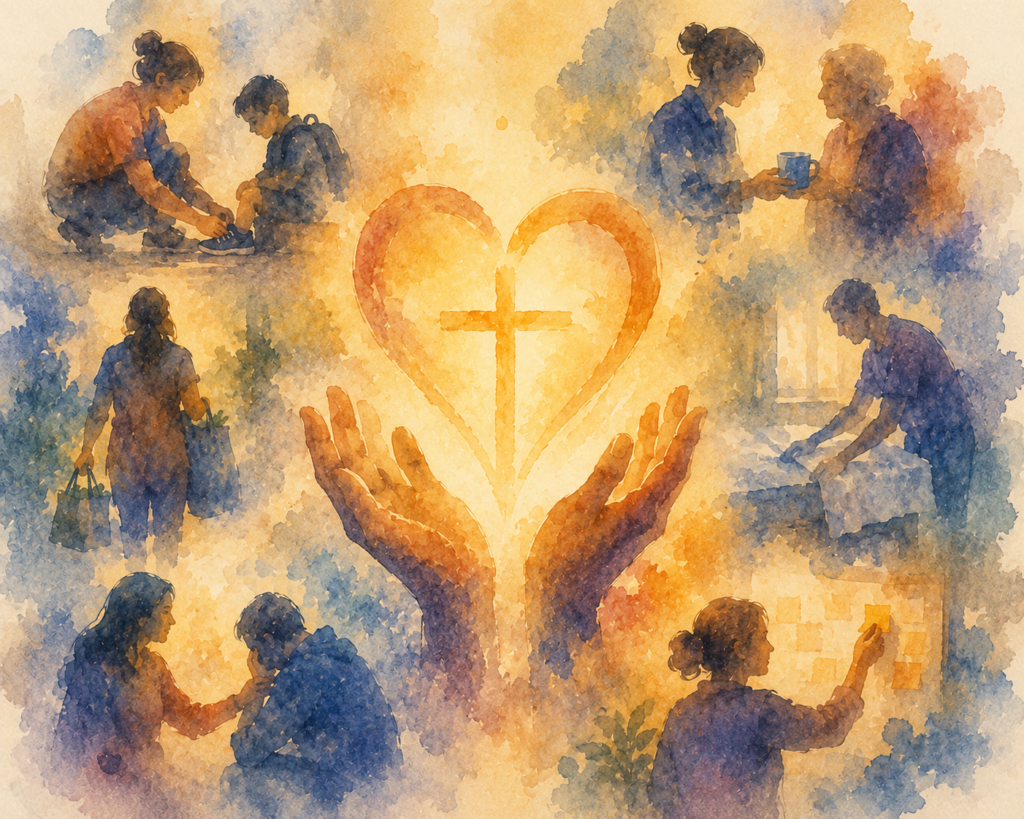
There are moments in life when it feels like things are unfinished. A habit we’re trying to change that keeps returning. A relationship that feels strained or uncertain. A season of life where we’re not quite sure who we’re becoming.
We might look at ourselves – or even at others – and wonder, Will this ever change? Am I getting anywhere?
In his letter to the Philippians, Paul offers a quiet but powerful reassurance:
“I am confident of this, that the one who began a good work among you will bring it to completion…”
It’s a simple sentence, but it carries a deep truth: God’s work in us is not finished.
Paul writes these words from prison, not from a place of comfort or clarity, but from uncertainty. And yet, he speaks with confidence. Not because everything is resolved, but because he trusts in the One who is still working.
That can be hard for us. We live in a world that values quick results and visible progress. We want growth to be obvious. We want change to be immediate. But the kind of work God does in us often unfolds slowly, quietly, even invisibly at times.
It happens in small shifts of perspective. In moments of patience where there once was frustration. In a growing compassion we didn’t realize was taking root. And sometimes, it’s only when we look back that we begin to see how far we’ve come.
This passage invites us to hold onto hope, because we are still being formed. God has not given up on you. God has not stopped working in your life. Even now, something is being shaped, strengthened, and renewed within you.
And perhaps just as importantly, God is still at work in others too. In the people we struggle to understand. In the situations that feel unresolved. In places where change feels slow or unlikely.
The work may not always be visible. But it is ongoing.
Take some time to sit with this week’s reading, and use the following questions in your time of reflection.
- Is there an area of your life where you feel “unfinished” or stuck right now?
- Can you think of a time when you later realized that growth was happening, even when you couldn’t see it at the time?
- Where might God still be at work in your life, or in someone else’s?
Let’s pray:
Faithful God, you are always at work, even when we cannot see it. When we feel unfinished or uncertain, remind us that your work in us is not complete. Give us patience for the process, and trust in you. Help us to notice the small ways you are shaping our lives, and to believe that you are still working in the people and situations around us. Carry us forward in hope, as your work in us continues to grow and unfold. AMEN
Sacred Rhythms: Practicing Gratitude
Philippians 1:1–18a
There’s something deeply personal in the way Paul begins his letter to the Philippians.
“I thank my God every time I remember you…”
It’s not a general kind of gratitude. It’s not abstract or distant.
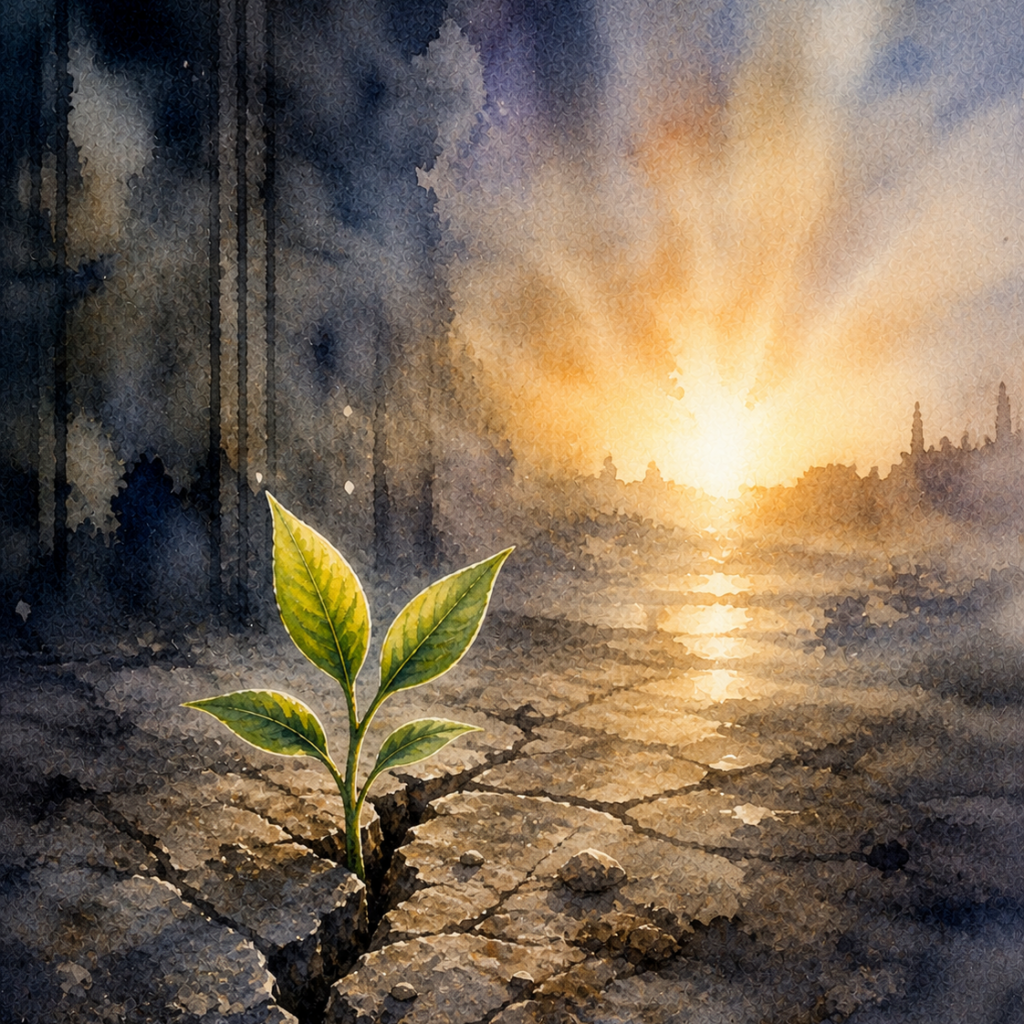
Paul is remembering real people – faces, names, shared moments – and as he does, his heart turns naturally toward thanksgiving. Even from prison, even in uncertain circumstances, his first instinct is not complaint or worry, but gratitude for the people who have walked alongside him.
It’s easy to rush past this kind of gratitude in our own lives. We move from one day to the next, often carrying responsibilities, concerns, and to-do lists. We might feel thankful in a general sense, but we don’t always pause long enough to name the people who have shaped us, supported us, or simply been present with us along the way. And yet, there is something powerful that happens when we do.
Gratitude deepens, relationships are honored, and our awareness of God’s presence in our lives grows clearer. Because often, God’s grace comes to us through people.
This week, try practicing intentional gratitude for people. Set aside a few quiet moments and think of 2 or 3 people who have made a difference in your life. They might be:
- someone who has encouraged you
- someone who has supported you in a difficult time
- someone who simply shows up, again and again
As each person comes to mind, pause and give thanks. You might pray:
“God, I thank you for _______. For their presence in my life, and for the ways they have reflected your love.”
If it feels right, you might also take a simple next step:
- send a message
- write a short note
- or tell them in person
Gratitude has a way of growing when it is shared. This practice doesn’t need to take long. Even a few minutes of intentional reflection can open your heart to the ways God has been at work through the people around you.
Let’s pray:
Gracious God, You have placed people in our lives as companions, encouragers, and guides. Too often, we move too quickly to notice the gift they are to us. Slow us down. Open our hearts to remember, and to give thanks. Help us to recognize your love reflected in the people around us, and give us the courage to share our gratitude with them. May our words and actions become a blessing to others, just as they have been a blessing to us. AMEN
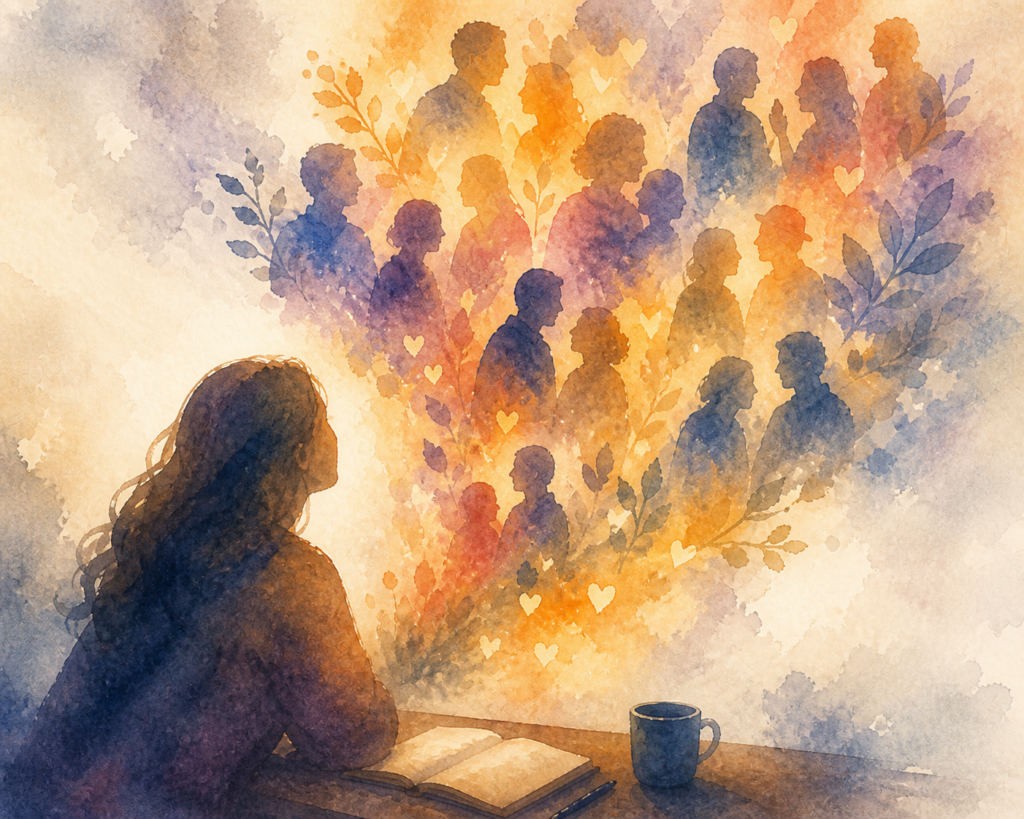
Mid-Week Moment: Singing in the Dark
Acts 16:16-34
Some nights feel longer than others. Most of us know what it is like to carry something heavy: worry about a loved one, uncertainty about the future, grief that lingers longer than expected, or the exhaustion that comes when life feels overwhelming.
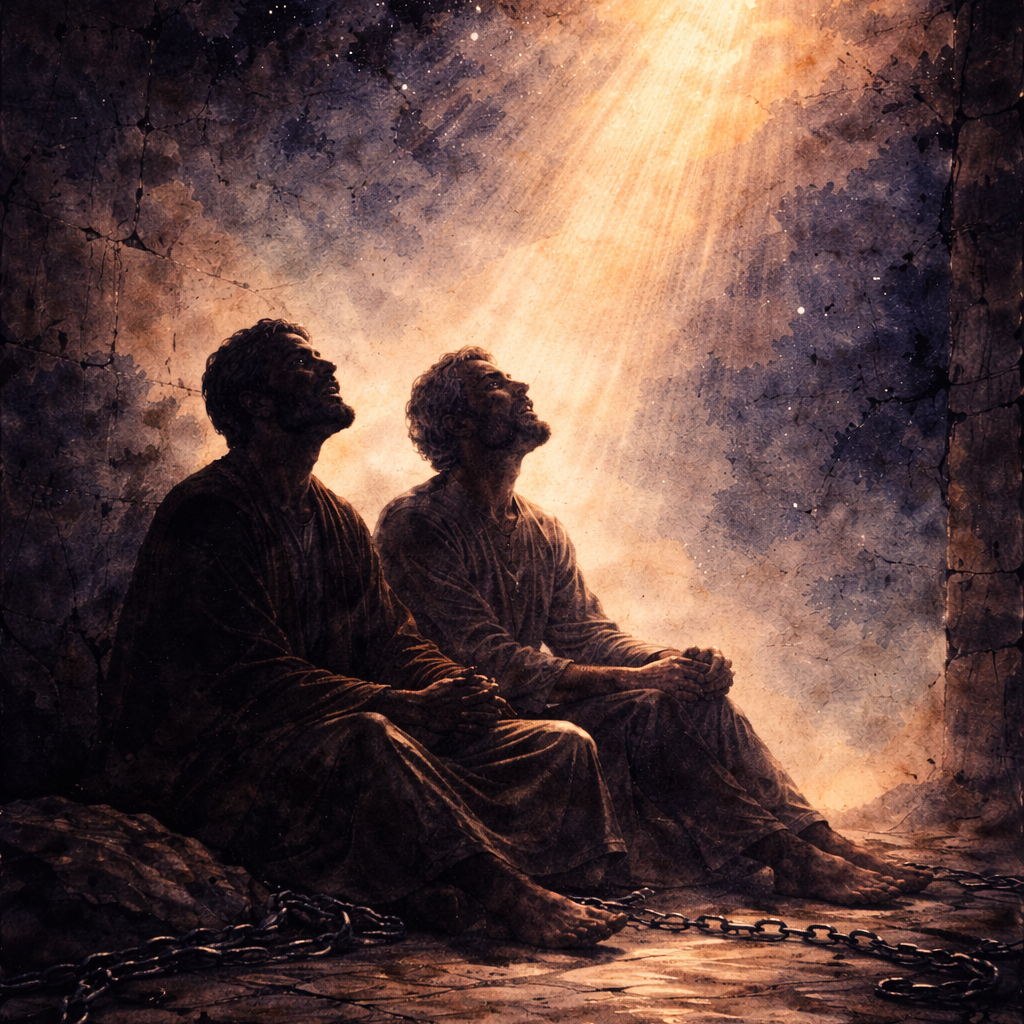
In Acts 16, Paul and Silas find themselves in a place like that. After freeing a slave girl from a spirit that oppressed her, they are dragged before the authorities, beaten, and thrown into prison. Their feet are fastened in stocks, and the doors are locked tight.
It is not where they expected to be, and it is certainly not where they deserved to be. Yet in the middle of the night, something remarkable happens. Instead of despairing, Paul and Silas begin to pray. Then they begin to sing.
Imagine the scene for a moment. A dark prison. Bruised bodies. Chains around their feet. And in that place, songs of faith rising into the night. They are not singing because everything is suddenly better. The chains are still there. The prison doors are still locked. The night is still dark. But their faith refuses to be silenced.
Sometimes we imagine faith as something that appears once everything is resolved, after the miracle happens, after the doors open, after the chains fall away. But this story reminds us that faith often shows itself in a different way. Sometimes faith is the courage to keep singing even when the night feels long.
We may not literally sing hymns in the middle of our struggles, but there are many ways we “sing in the dark.” Every time we choose hope instead of despair. Every time we pray when we feel uncertain. Every time we trust that God is still present even when we cannot yet see the way forward.
In the story, the earthquake eventually comes. The chains fall away. The prison doors open. But the most powerful moment happens before any of that, when two weary prisoners lift their voices in prayer and song, trusting that God is with them even in the darkness. That kind of faith can be contagious. The other prisoners listen. The jailer’s life is changed. A household is welcomed into new life. All because someone dared to sing in the dark.
Perhaps the invitation for us this week is simple: to notice where God might be present in the darker places of our lives, and to hold onto hope, even there.
Take some time to sit with the reading this week, and reflect on the following questions:
- Have you ever experienced a time when hope or faith helped carry you through a difficult season?
- What helps you stay connected to God when life feels uncertain or heavy?
- Is there a small way you might bring prayer, gratitude, or hope into your week, even if things are not yet resolved?
Let’s pray:
Loving God, in the moments when life feels heavy and the path ahead is unclear, remind us that we are not alone. When the night feels long, give us the courage to hold onto hope. When we feel weary, help us remember your presence with us. And when we struggle to find the words, receive even our quiet prayers. Fill our hearts with the kind of faith that can sing in the dark, trusting that your light is never far away. Amen.

Sacred Rhythms: Midnight Moments
Acts 16:16-34
Some moments in life feel like midnight. It’s not always the time on the clock, but the feeling in our hearts, the quiet hours when worry creeps in, when uncertainty lingers, or when life feels heavy and unclear. Midnight moments are those spaces when we might feel most alone, uncertain, or unsure what comes next.
In Acts 16, Paul and Silas find themselves in such a moment. They have been beaten, imprisoned, and locked away in the inner cell. Their feet are fastened in stocks, their freedom taken from them. And then the scripture says something surprising:
“About midnight Paul and Silas were praying and singing hymns to God.”
In the darkest hour of their day, they turn their attention toward God. They pray. They sing. They remain open to God’s presence even in a place where hope might seem distant.
Then the ground shakes. The prison doors fly open. Chains fall away. But perhaps the deeper miracle begins even earlier, when, in the middle of the night, Paul and Silas choose to turn their hearts toward God.
This story reminds us that God does not only meet us in peaceful sanctuaries or carefully planned moments of prayer. God also meets us in the unexpected hours of our lives, in hospital waiting rooms, restless nights, quiet car rides, or the ordinary pauses of a busy day.
Midnight moments can become holy moments when we remember that God is already present there.
This week, try practicing awareness of the “midnight moments” in your day. These are the unexpected or quiet spaces that appear throughout ordinary life. When you notice one of these moments, perhaps when you feel anxious, tired, uncertain, or simply still, pause for a brief prayer.
You might try this simple practice:
- Pause for a moment wherever you are.
- Take a slow breath.
- Quietly pray: “God, you are here with me.”
You do not need a long prayer or a perfect setting. The goal is simply to notice God’s presence in the moment you are already in.
You might practice this:
- during a restless moment in the night
- while waiting in line
- sitting quietly in your car
- or during a pause in your day
Over time, these small prayers can help us discover that even the ordinary or uncertain moments of life can become spaces where God meets us.
Let’s pray:
Loving God, You meet us in every hour of our lives, in the bright mornings and the quiet midnights. When we find ourselves in moments of uncertainty or worry, help us remember that you are near. Open our hearts to notice your presence in the ordinary spaces of our days. Teach us to pause, to breathe, and to trust that even in the darkest hours your light is already at work. Walk with us in every moment, and help us to recognize your grace wherever we are. AMEN
Mid-Week Moment: Love in the face of Fear
Acts 9:1–19a
When we hear the story of Saul on the road to Damascus, we often focus on the dramatic moment: the blinding light, the voice of Christ, the sudden change in direction. But tucked into the story is another moment that is quieter, and perhaps just as remarkable.
It is the moment when Ananias says yes. God asks Ananias to go to Saul, the very man who had been persecuting followers of Jesus. Saul’s reputation had spread far beyond Jerusalem. People knew what he had been doing. People were afraid of him.
So when God calls Ananias to go to him, his hesitation makes perfect sense. “Lord,” Ananias says, in so many words, are you sure about this? And yet, after voicing his concern, Ananias goes.
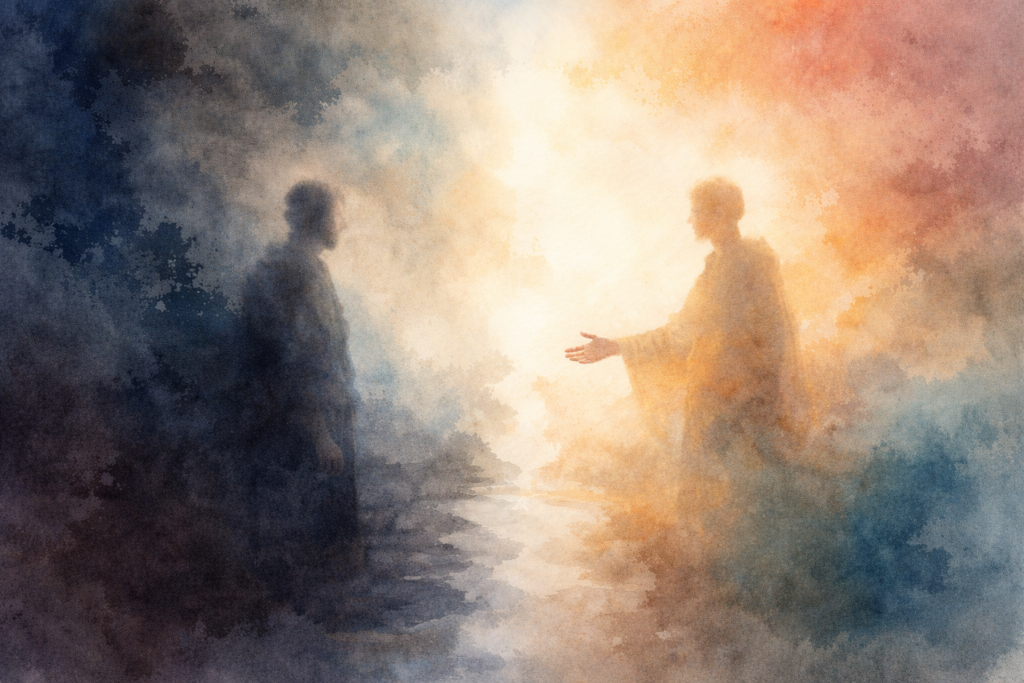
He walks into the house where Saul is staying. He approaches the man many would have seen as an enemy. And then he says something astonishing.
“Brother Saul…”
Brother. Not enemy. Not persecutor. Brother.
In that moment, Ananias chooses something difficult and deeply faithful. He chooses to see Saul not only for who he has been, but for who God is calling him to become.
Jesus often spoke about loving our enemies, but that teaching can feel abstract, until we meet someone who has hurt us, frightened us, or stands on the opposite side of what we believe.
Ananias shows us what that love can look like. It does not ignore fear. It does not pretend the past never happened. But it trusts that God can work transformation in people, including those we might struggle to welcome. And sometimes that transformation begins when someone has the courage to reach across the line of fear.
In a world that often encourages division, suspicion, and distance, the story of Ananias reminds us that the way of Christ is different. It is the way of courage, the way of compassion, the way of seeing even those we fear as people God has not given up on.
As you read through the passage this week, take some time to reflect on the following questions:
- Is there a time when someone showed you unexpected kindness or grace? How did it affect you?
- Are there people or groups it is difficult for you to see with compassion right now?
- What might it look like to take one small step toward understanding, patience, or kindness this week?
Let’s pray:
God of grace, you see possibility where we see fear, and hope where we see division. Give us the courage of Ananias, the courage to trust that your transforming love is at work in ways we cannot always see. Soften our hearts when we are tempted to draw lines that keep others at a distance. Help us to choose compassion over fear, and grace over suspicion. And guide us to be people who reflect your love, even in the most difficult places. AMEN
Sacred Rhythms: Practicing The Pause
Acts 9:1–19a
Saul is moving with absolute certainty. He knows where he is going. He knows what he believes. He knows what must be done.
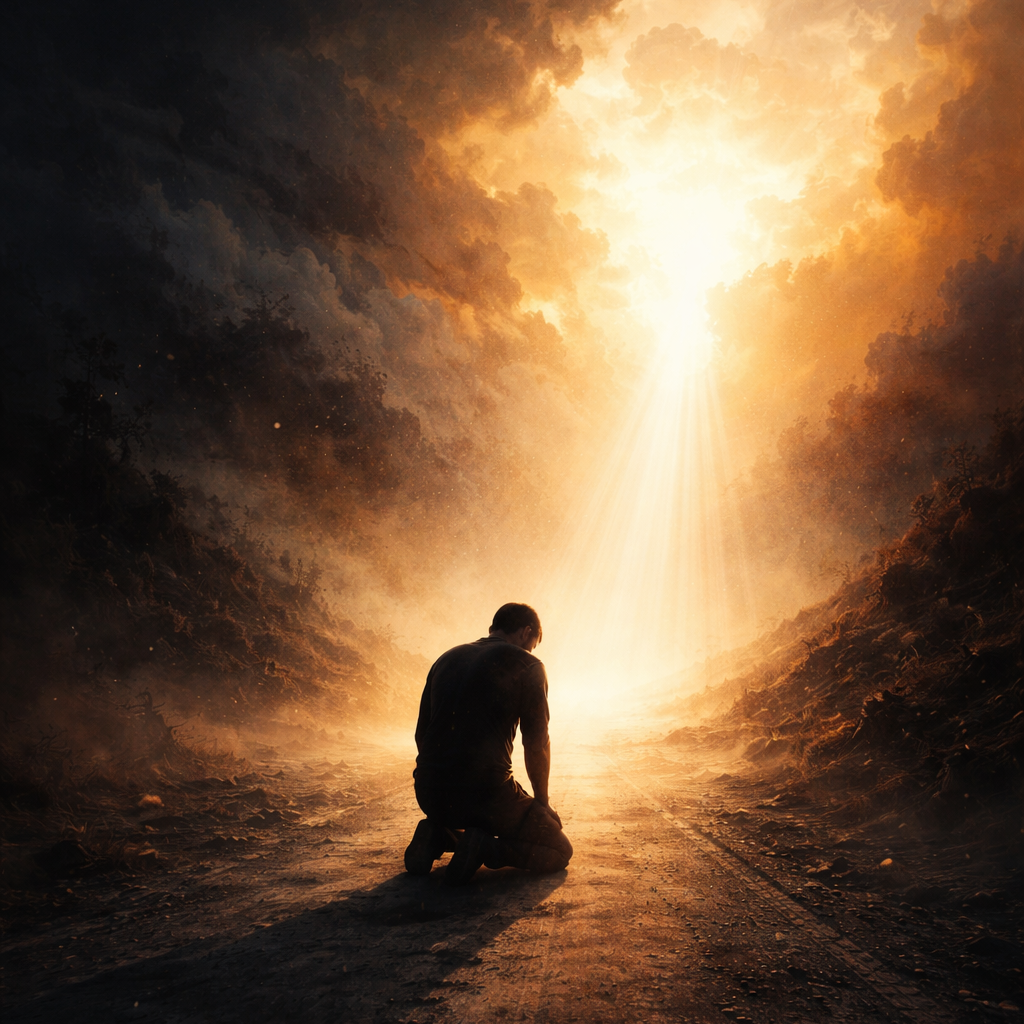
And then, on the road to Damascus, everything stops. A light flashes. A voice calls his name. Saul falls to the ground, and the direction of his life changes in a moment.
What strikes me about this story is that Saul’s transformation begins with an interruption. Before he sees clearly, before he understands what God is doing, he must first stop.
His plans pause. His certainty pauses. His journey pauses. Sometimes God meets us this way too, not by speeding us up, but by slowing us down.
We live in a world that pushes us to keep moving: more tasks, more opinions, more urgency. We often rush forward with the same kind of confidence Saul had on the road. Yet moments of transformation rarely come when we are rushing. They come when we pause long enough to notice that God is already present, already speaking, already inviting us to see differently.
A sacred pause can become a doorway where God gently interrupts our momentum and calls our name. This week, try practicing a Sacred Pause during your day.
You might do this when you feel rushed, frustrated, or certain you must push forward. Instead of reacting immediately, take a moment to stop.
Try this:
- Stop what you are doing for a moment.
- Take three slow, steady breaths.
- Quietly pray: “Lord, help me see what I might be missing.”
You don’t need a long time. Even thirty seconds can be enough.
The goal isn’t to force an answer or solve a problem. The goal is simply to create space, to let your spirit slow down so you can notice God’s presence in the moment. Like Saul on the road, we sometimes discover that the most important step in our journey begins when we pause.
You might try this practice:
- before responding to a difficult situation
- before making a decision
- or simply at random moments throughout the day
Each pause becomes a small way of saying: “God, I am listening.”
Let’s pray:
Loving God, You meet us in the middle of our journeys, sometimes in moments we least expect. When our lives feel hurried and our minds race ahead, teach us how to pause. Slow our steps and quiet our hearts so that we may hear your voice calling our name. Open our eyes to what we may not yet see, and guide us gently in the direction of your grace. In every pause, remind us that you are already present with us on the road we walk. AMEN
46 Main Street
Fredericton, New Brunswick
E3A 1C1
506-458-9452 (Church Office)
506-262-2150 (Rev. Richard's Cell)
Office Hours
Tuesday - Friday 9am to 2pm
Rev. Richard's Drop-in Office Hours
Tuesday & Thursday 10:00AM to 12:30 PM
We dedicate the revitalization of our online presence to the memory of the late Mary Hicks. We are grateful for Mary’s personal estate bequest in support of the work and mission of Nashwaaksis United Church.