
What's Happening?
Mid-week Moment: Honouring Doubt
John 20:19-31
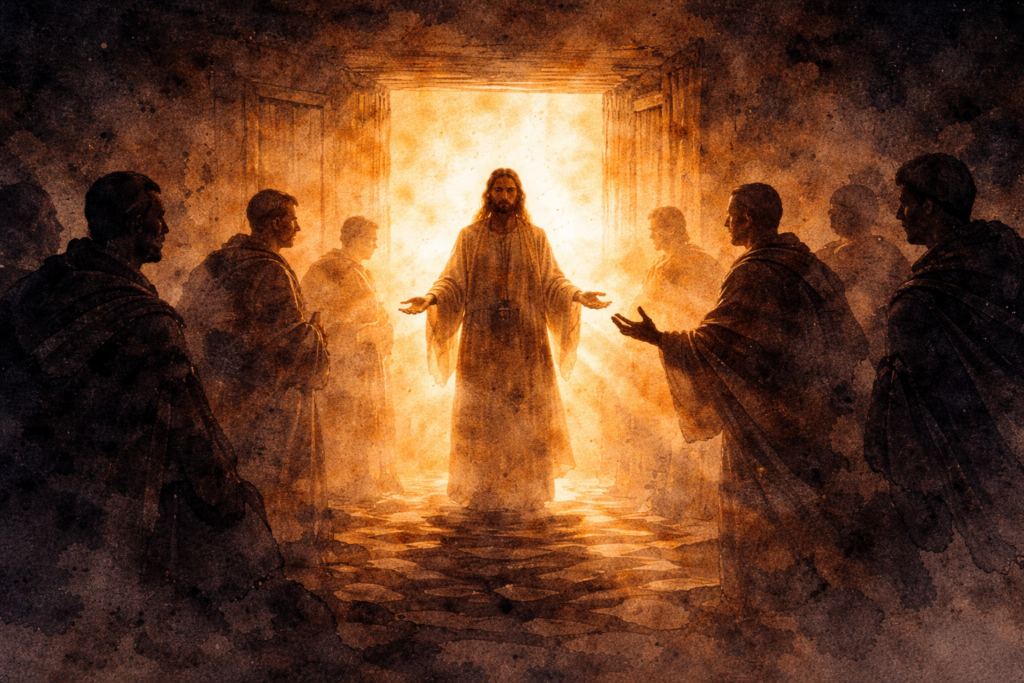
Not everyone arrives at resurrection in the same way. In John’s Gospel, the disciples encounter the risen Christ in a locked room. Fear still hangs in the air. Confusion has not yet cleared. Even after the miracle of Easter morning, they are still trying to understand what has happened. And into that confusion, Christ appears to greet and eat with his friends and followers.
But Thomas is not there.
When the others tell him the news – “We have seen the Lord!” – Thomas does not simply nod along. He does not pretend certainty. Instead, he responds with honesty:
“Unless I see the mark of the nails in his hands, I will not believe.”
For generations, Thomas has carried the nickname “Doubting Thomas.” But perhaps that label misses something important. Thomas is not cynical. He is not mocking faith. He is simply telling the truth about where he is. And Jesus does not reject him for it.
A week later, the disciples are gathered again behind those same locked doors. This time Thomas is with them. And once again, Jesus appears among them with the same words:
“Peace be with you.”
Then he turns directly to Thomas. Not with criticism. Not with shame. But with invitation.
“Put your finger here. See my hands. Reach out your hand and put it in my side.”
Jesus meets Thomas exactly where his questions live. There is something deeply comforting about this moment. It reminds us that faith does not require us to silence our questions. The risen Christ does not demand perfect certainty before showing up. Instead, he meets people in the middle of their searching.
Thomas needed to see and touch in order to understand. Others believed sooner. Both responses are part of the story. The path of faith is rarely identical from person to person. Some people experience belief like a sudden sunrise. Others come to it slowly, through conversation, questioning, and reflection.
And Christ walks patiently with both.
In many faith communities, doubt can feel like something we are supposed to hide. We worry that admitting uncertainty might weaken our faith or disappoint those around us. But John’s Gospel tells a different story. Thomas’ honest question leads to one of the most powerful confessions in the entire book. When he finally recognizes Jesus, he responds with words of deep devotion:
“My Lord and my God.”
Sometimes faith grows not in spite of our questions, but through them. Doubt can become a doorway. A doorway that leads us to seek more deeply, listen more carefully, and encounter Christ in ways we might never have imagined.
Easter does not demand perfect certainty. It invites us to bring our whole selves: our hope, our confusion, our trust, and our questions, into the presence of the risen Christ. And there, just as he did for Thomas, Jesus meets us with peace.
Take some time this week to sit with the reading – with Thomas – and reflect with the following questions:
- Have there been moments in your life when doubt was part of your faith journey?
- Why do you think Thomas needed to see and touch in order to believe?
- What questions about faith or life are you carrying right now?
- What might it mean to bring those questions honestly into Christ’s presence?
Following your reflection, take a deep breath, and pray.
Risen Christ, you meet us not only in certainty, but in our questions and searching. Give us courage to be honest in our faith, to bring our doubts and wonderings before you without fear or shame. Walk with us as we seek to know you more deeply, and speak your peace into every place of uncertainty. AMEN
Sacred Rhythms: Breathing the Peace of Christ
John 20:19-31
The doors are locked. The disciples are gathered together, but not in celebration. They are afraid. Everything they thought they understood about the world has been shaken. The teacher they followed has been crucified. Rumors of resurrection are beginning to circulate, but fear still hangs in the air. And so they hide.
It’s a very human response. When life feels uncertain, when grief or confusion presses in, our instinct is often to close the doors. We protect ourselves. We withdraw. We brace for whatever might come next.
But then something unexpected happens. Jesus comes and stands among them. No knocking. No forcing the door open. No rebuke for their fear. Just presence. And the first words he speaks are simple:
“Peace be with you.”
Then he shows them his hands and his side – the wounds that tell the story of what he has endured – and again he says it:
“Peace be with you.”
And then, in one of the most intimate moments in all the resurrection stories, Jesus breathes on them. Breath: the sign of life since the very beginning of creation. In that moment, the peace of the risen Christ is not just spoken. It is shared. Given. Breathed into the room.
This is the gift of resurrection: peace that enters locked spaces. Peace that meets us in fear rather than waiting for us to become fearless. Peace that arrives not because everything is resolved, but because Christ himself is present. The disciples are not suddenly brave. Their circumstances have not instantly changed. But the presence of Jesus begins to reshape the room. And perhaps that is where many of us find ourselves as well. We carry anxieties about the future. We hold grief or uncertainty in quiet corners of our hearts. There are rooms within us that remain tightly closed.
Yet the resurrection story reminds us that Christ does not wait outside those doors. He enters them, and he breathes peace.
This week’s Sacred Rhythm is about receiving the breath of Christ, so take some time this week and just breathe.
Find a Quiet Place: Sit comfortably in a quiet space. Let your feet rest on the floor and your hands relax in your lap. Take a moment to simply be in the moment. Notice your breathing without trying to change it.
Become Aware of the Room: Imagine yourself sitting in the room with the disciples. The doors are closed. The air is heavy with uncertainty. Notice what emotions you carry into this moment: anxiety, weariness, hope, questions. You do not need to hide them.
Imagine Christ’s Presence: Now imagine Jesus standing among you. Not distant. Not hurried. Simply present. Hear him speak the same words he spoke to the disciples: “Peace be with you.”
Breathe the Peace: Begin to pray with your breath. As you breathe in, quietly pray: “I receive your peace.” As you breathe out, pray: “I release my fear.” Continue this rhythm slowly for several minutes. Let your breathing become steady and gentle.
Rest in the Moment: You do not need to force any particular feeling. Simply rest in the awareness that Christ stands with you, offering peace that does not depend on circumstances. If your mind wanders, gently return to the breath and the prayer.
Carry the Peace Forward: As you move through the week, return to this simple practice whenever anxiety rises. Pause. Take a breath. Remember the words of Christ:
“Peace be with you.”
The risen Christ still enters our locked rooms. And his peace is still being breathed into the world.
Let’s pray:
Risen Christ, you come to us even when the doors are closed. When fear tightens around our hearts, stand among us with your quiet presence. Breathe your peace into the anxious places within us. Calm the storms we carry. Open the rooms we have kept locked. Teach us to receive the life you offer and to share that peace with the world around us. AMEN

❄️ Service Cancellation – Good Friday ❄️
With freezing rain in the forecast and uncertain driving conditions expected, we have made the difficult decision to cancel our Good Friday service today.
We do so with regret, as this is a meaningful gathering in our Holy Week journey. However, the safety of our community must come first, and we want everyone to stay safe as the weather moves through.
We encourage you to take a quiet moment at home today for reflection and prayer as we remember this sacred day.
Thank you for your understanding. Please stay safe, take care on the roads, and we look forward to gathering together on Easter morning.

Mid-week Moment: While It Was Still Dark
John 20:1-18
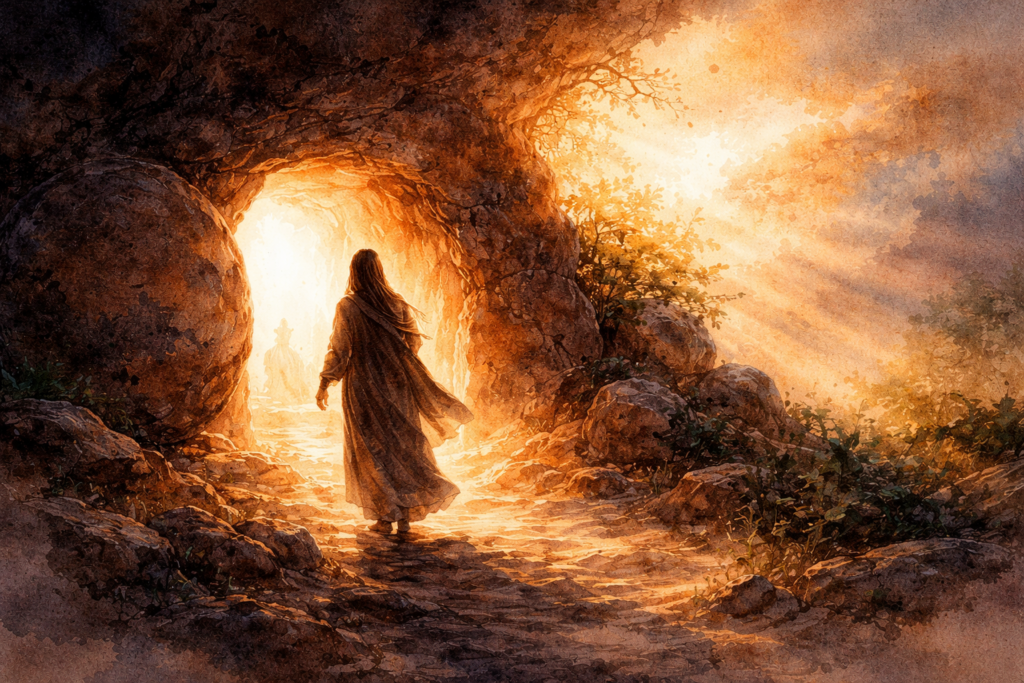
John’s resurrection story begins quietly. There are no trumpets. No crowds. No triumphant announcements. Just a woman walking through the early morning, carrying grief with her.
“Early on the first day of the week, while it was still dark, Mary Magdalene came to the tomb.”
The resurrection has already happened, but the world does not know it yet. Mary certainly doesn’t. As far as she knows, the story has ended in loss. Jesus is gone. Hope has been buried. And so she walks through the darkness.
There are seasons in life that feel like that. Moments when the future is unclear. When grief feels heavier than hope. When faith feels more like walking through shadows than standing in light.
We may still show up. We may still pray. We may still take the next step forward. But it can feel like we are moving through the dark. Mary’s journey reminds us of something: the resurrection does not wait for the light to appear before it begins. God is already at work long before we recognize it. While it is still dark.
Mary arrives at the tomb expecting to mourn. Instead she finds confusion. The stone is rolled away. The body is gone. Nothing makes sense. Even when Jesus appears to her, she doesn’t recognize him at first. Grief clouds her vision. She assumes he is the gardener.
It is only when he speaks her name – “Mary.” – that everything changes. In that moment, the darkness begins to lift, not because the sun suddenly rises, but because hope has been standing beside her all along.
Resurrection often arrives like that. It’s not always as a dramatic moment of clarity, not always with immediate understanding. Sometimes it begins in a conversation that brings unexpected comfort, in a new possibility we hadn’t imagined, in a moment when we realize that despair no longer has the final word. Often we only recognize resurrection in hindsight. But the good news of Easter begins here: even when it is still dark, God is already bringing life.
Holy Week invites us to linger in that truth. We do not rush past sorrow. We do not pretend the darkness is not real. Instead, we remember that the God who raised Jesus from the grave is already at work in places we cannot yet see.
Hope begins earlier than we think.
Take some time this week to sit with the reading from John, and while you do reflect on the following questions.
- Where in your life does it feel like you are still walking in the dark?
- Have you ever recognized hope only after you had already begun moving forward?
- What might it mean to trust that God is at work even before you can see the light?
- Where might resurrection already be quietly unfolding in your life?
Let’s pray:
God of the early morning, you meet us in the quiet hours when hope feels far away. When we walk through darkness, give us courage to keep moving. Help us trust that even now, long before we recognize it, your life is already rising. AMEN
Sacred Rhythms: Listening for Your Name
John 20:1-18
It is still dark when Mary Magdalene arrives at the tomb. She comes carrying grief, confusion, and the weight of loss. The stone is already rolled away. The tomb is empty. Nothing makes sense.
She runs. She tells the others. They come and look. They leave again. But Mary stays. She stands outside the tomb weeping. Even when angels appear, her grief keeps her from seeing clearly. Even when Jesus himself stands nearby, she assumes he is the gardener. Resurrection is already present, but she cannot yet recognize it.
And then Jesus speaks one word.
“Mary.”
Her name. And in that moment, everything changes. She turns. She sees. She recognizes the one she thought she had lost. The resurrection becomes real not through explanation, but through recognition. Not through argument, but through relationship. Jesus calls her by name.
This is one of the truths of the resurrection story: the risen Christ meets us personally. The resurrection is not only a cosmic event, it is also an intimate encounter.
And Jesus still calls people by name. He meets us in the places where we are searching, grieving, confused, or simply lingering. Often we do not recognize him right away. We mistake his presence for something ordinary. We assume the story has already ended. But sometimes, in the quiet, we hear it.
Our name.
Let’s take some time now to listen for Christ calling our name as he did Mary’s. Set aside 10–15 minutes in a quiet space this week.
Enter the Story: Begin by taking a few slow breaths. Imagine yourself in the garden with Mary. It is early morning. The air is cool. The tomb stands open. The world is still quiet. Let yourself stand there for a moment.
Notice What You Are Carrying: Ask yourself: What grief am I holding right now? What questions or uncertainties weigh on me? Where in my life does resurrection still feel hidden? Simply notice what arises. There is no need to fix anything.
Listen: Now imagine Jesus standing nearby. Not distant. Not rushing. Simply present. In your prayer, imagine him speaking your name. Let that moment unfold slowly.
- How does it feel to be seen?
- What shifts in you when you are known?
Turn Toward Him: Just as Mary turns toward Jesus, allow yourself to turn inwardly toward Christ. You may wish to pray quietly:
“Jesus, help me recognize you.”
Sit for a few moments in stillness.
Carry the Moment with You: As you go through the week, pause occasionally and remember this moment. When life feels rushed or heavy, take a breath and imagine Jesus calling your name again. Resurrection often begins with recognition.
Mary came to the garden looking for death. Instead, she discovered that the one she loved was already alive. And the first word of the resurrection was not a sermon, not a command, not a proclamation. It was a name.
Let’s pray:
Risen Christ, you meet us in the quiet gardens of our lives. When grief clouds our vision and hope feels distant, call us again by name. Help us recognize your presence in the places we least expect. Turn our hearts toward you, and open our eyes to the life already unfolding around us. AMEN

Mid-week Moment: Welcoming Jesus – On Our Terms or His?
John 12:12–27
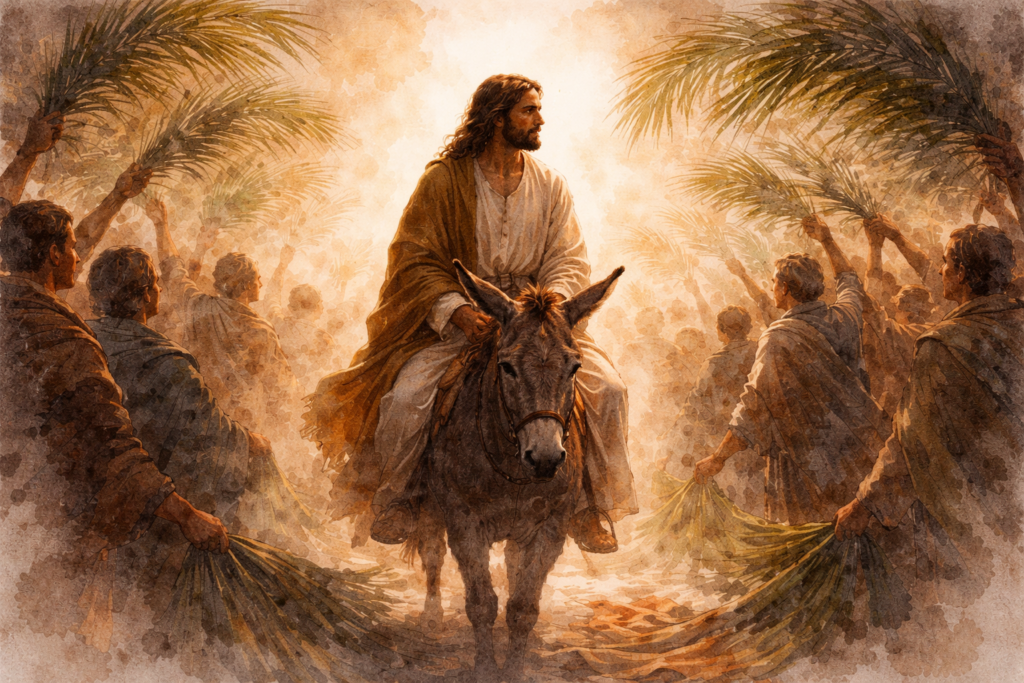
The crowd is ready. They gather with palm branches in hand, voices raised, hearts full of expectation.
“Hosanna! Blessed is the one who comes in the name of the Lord!”
It is a moment of celebration. A parade. A welcome. And yet, beneath the surface, something else is happening. The people know what they want. They want a king who will restore order. A leader who will overthrow oppression. A savior who will meet their expectations and fulfill their hopes in the way they understand. And so they welcome Jesus. But they welcome him on their terms.
Jesus enters the city, but not as they expect. No war horse. No show of power. No rallying cry for revolt. Instead, a donkey. A quiet presence. A different kind of kingship altogether.
Even in the celebration, there is a disconnect. The crowd shouts “Hosanna!” – which means “Save us!” – but the kind of salvation they are asking for is not the kind Jesus comes to bring. And Jesus knows it.
In the verses that follow, the tone shifts quickly. The excitement of the crowd gives way to something deeper, more difficult. Jesus begins to speak of a grain of wheat falling to the earth and dying. Of losing life in order to find it. Of a path that leads not to immediate triumph, but through surrender.
This is not what the crowd had in mind. It’s easy to see the crowd from a distance. It’s harder to recognize ourselves within it. Because we, too, come with expectations. We pray for clarity, but often hope for control. We ask for guidance, but prefer it to align with what we’ve already decided. We welcome Jesus, so long as he fits within the life we’ve imagined.
We say, “Come, Lord.” But sometimes we mean, “Come… and confirm what I already want.”
Palm Sunday holds up a gentle but honest mirror. What if the life Jesus offers is not the one we would choose? What if the path of faith leads not around difficulty, but through it? Not toward control, but toward trust? Not toward power as the world defines it, but toward love that gives itself away?
The gift of Christ is not always what we expect, but it is always what we need. This is the invitation of this passage. To move from welcoming Jesus on our terms, to trusting him on his. To loosen our grip on expectation. To allow ourselves to be surprised. To follow even when the path looks unfamiliar.
Because the one we welcome is not just a king of our imagining, but the Savior who leads us into deeper life than we could create for ourselves.
Take some time with the reading this week, and use the following questions to focus your reflection:
- What expectations do you find yourself placing on God right now?
- Where might you be asking Jesus to fit into your plans, rather than opening yourself to his?
- What would it look like to trust that Christ offers not always what you want, but what you truly need?
- Where might you be invited to follow, even if the path feels uncertain?
Let’s slow down, and pray
Jesus, we welcome you with open hands, yet often with guarded hearts. You come to us in ways we do not expect, offering not always what we want, but always what we need. Give us the courage to trust you more deeply. Loosen our grip on our own plans, and lead us in your way of love. AMEN

Sacred Rhythms: Letting Go to Bear Fruit
John 12:12–27
The crowds are shouting “Hosanna!” Palm branches wave. Hope fills the air. And yet, in the middle of the celebration, Jesus begins to speak of something entirely different:
“Unless a grain of wheat falls into the earth and dies, it remains just a single grain; but if it dies, it bears much fruit.”
It’s a strange thing to say in a moment like this. The crowd is looking for victory. Jesus is speaking about surrender. The crowd is celebrating what they hope will be. Jesus is naming what must be let go. This is the tension at the heart of the gospel.
We want life, but resist loss. We long for growth, but cling to what is familiar. We pray for transformation, but hold tightly to what we know. And yet, Jesus tells us plainly: fruitfulness comes through release.
A seed cannot become what it is meant to be if it remains closed, protected, untouched. It must be placed into the ground. It must break open. It must let go of what it was in order to become something new.
This is not destruction. It is transformation. And this is where the invitation becomes personal. Because each of us carries something we are holding onto:
- a version of ourselves
- a fear we protect
- a need to control outcomes
- a wound we refuse to release
- a certainty we are afraid to question
We hold these things tightly because they feel like life. But what if they are the very things keeping us from it?
This week’s spiritual practice invites us to let go so that we might bear fruit. Set aside 15–20 minutes in a quiet space this week.
Settle into Stillness: Sit comfortably. Take a few slow breaths. Let your body arrive. Let your thoughts settle. You don’t need to force silence, just allow yourself to be present.
Name What You Are Holding: Gently ask yourself:
- What am I holding onto right now?
- What feels too important to release?
- Where do I sense God inviting me to loosen my grip?
Don’t rush. Let whatever comes rise naturally.
Hold It in Your Hands: Imagine placing that thing – whatever it is – into your hands. See it clearly. Feel its weight. Notice why it has been hard to let go.
Listen to Jesus’ Words: Slowly reflect on:
“Unless a grain of wheat falls into the earth and dies…”
Let the words settle, not as pressure, but as invitation. What might it mean for this to be planted rather than protected
Practice Release: Now, gently open your hands. You might physically turn your palms upward as a sign of surrender. Pray quietly:
“God, I release this to you. Grow something new in its place.”
Take a few slow breaths here.
Trust the Hidden Work: A seed buried in the soil does not immediately look like life. And yet, something is happening. As you move through your week, resist the urge to reclaim what you’ve released. Trust that God is at work in ways you cannot yet see.
Transformation often begins underground. This practice is not about losing ourselves. It is about becoming who we were meant to be. It is about trusting that what we release in faith is not wasted, but transformed.
The crowds shouted Hosanna without knowing what was coming. We walk a little further into the story. We know that letting go leads to the cross, but also to resurrection.
Let’s pray:
God of life and transformation, you hold what we cannot yet release. Give us courage to loosen our grip on what feels safe but keeps us small. Teach us to trust the quiet work of your Spirit, even when we cannot see what is growing. Take what we offer in surrender and bring forth new life in your time. And as we walk this path of letting go, root us in the promise that nothing given to you is ever lost. We offer this and all our prayers in the strong name of Jesus Christ. AMEN
Mid-Week Moment: Knowing and Still Failing
John 19:1–16a
Pilate knows something isn’t right. Three times in this passage, he says it in different ways: “I find no case against him.” He sees the injustice. He recognizes that Jesus does not deserve what is happening. There is a clarity, however faint, that breaks through the noise of the crowd and the pressure of the moment.
And yet, he still hands Jesus over.
There is something uncomfortably familiar about Pilate. He is not portrayed as cruel or malicious. If anything, he seems hesitant. Caught. Trying to navigate a situation that feels bigger than him. He asks questions. He moves back and forth between Jesus and the crowd. He even tries, in his own way, to release him.
But in the end, knowing is not enough. Fear wins. Pressure wins. Convenience wins.
Lent has a way of bringing us face to face with these kinds of moments in our own lives. Not the dramatic ones, perhaps. Not the decisions that shape history. But the everyday moments where we sense what is right, and still hesitate.
We know when a word needs to be spoken. We know when kindness is needed. We know when silence becomes complicity. And yet, we pause. Because speaking up might cost something. Because standing firm might create tension. Because choosing what is right is rarely the easiest path.
Pilate reminds us that the struggle between truth and fear is not new. But this story is not only about failure. It is also about a God who remains present in the midst of it.
Jesus stands before Pilate, not arguing, not defending, not forcing the outcome. He stands in truth, in steady presence, in a kind of strength that does not rely on control.
Even when Pilate falters, Jesus does not. Because our faith is not built on our perfect courage. It is grounded in Christ’s unwavering faithfulness.
Still, the question lingers for us this week:
- Where are the places in our lives where we already know, but have not yet acted?
Lent does not ask us to become perfect overnight. But it does invite us to notice, to name the tension, and, perhaps, to take one small step toward truth even when it feels costly.
As you sit with the reading this week, reflect on the following questions:
- When have you known the right thing to do, but struggled to follow through?
- What fears or pressures tend to shape your decisions in those moments?
- Where might God be inviting you to take a small step toward courage this week?
- What does it mean to trust Christ’s faithfulness, even when your own feels uncertain?
Let’s pray:
Faithful God, you know the places where we hesitate, where fear holds us back from what we know is right. Meet us in those moments with grace. Give us courage, even in small ways, to choose truth, compassion, and love. And when we falter, remind us that your faithfulness never wavers. AMEN

Sacred Rhythms: The Practice of Holy Nonviolence
John 19:1-16a
There is violence all through this passage. Jesus is flogged. Mocked. Dressed in a purple robe and crowned with thorns. Struck. Displayed. The cruelty is not only physical. It is public. Humiliating. Performative. Power flexing its muscles. Fear protecting itself through domination.
And in the middle of it all, Jesus does something astonishing. He does not return violence for violence. He does not match humiliation with humiliation. He does not scramble for revenge. He does not become what is being done to him.
This is not weakness. It is not passivity. It is not surrender to evil. It is a different kind of strength. Jesus remains rooted in truth, even while surrounded by brutality. He does not let violence dictate who he will be. He refuses to mirror the spirit of the empire, even as it closes in around him. This is the heart of holy nonviolence.
Holy nonviolence is not pretending harm does not exist. It is not avoiding conflict or becoming silent in the face of injustice. It is the courageous refusal to let hatred shape our hearts or determine our response. It is strength disciplined by love. It is resistance without becoming cruel. It is truth spoken without contempt. That kind of strength is deeply needed in our world.
We live in a time when violence travels quickly, not only through wars and weapons, but through words, contempt, ridicule, and the daily habit of dehumanizing those we fear or oppose. We are constantly being formed by outrage. It becomes so easy to strike back, to harden ourselves, to believe that force is the only language power understands.
But Jesus shows another way. He shows us that love can remain unbroken even when the world is at its most merciless.
Today’s Sacred Rhythm invites us to practice that way in the places we actually live: in tense conversations, in online spaces, in moments of anger, in relationships under strain, and in the silent chambers of our own hearts.
I invite you to set aside 15-20 quiet minutes this week for prayerful reflection.
Begin by taking a few slow breaths. Let your body settle. Place your feet on the ground and notice the support beneath you. Now bring to mind a place of tension in your life. It may be a conflict, an ongoing frustration, a painful conversation, or even a pattern of inner anger that keeps rising.
Without judging yourself, ask:
- Where am I tempted to strike back?
- Where do I feel the urge to wound, dismiss, or overpower?
- Where am I being invited to respond with strength, but not harm?
Sit with those questions gently. Then imagine Jesus before Pilate, wounded, mocked, yet still fully himself. Notice his steadiness. Notice his refusal to become cruel. Let that image stay with you.
Now pray:
“Jesus, teach me strength that does not wound.”
Repeat it slowly a few times. If it helps, open your hands in your lap as a sign of release. With each breath, imagine letting go of the need to retaliate, to win, or to prove yourself through force. You may also choose one concrete act of holy nonviolence for the week ahead:
- pausing before responding in anger
- refusing to join harmful speech
- speaking truth without contempt
- choosing not to escalate a tense moment
- praying for someone you are struggling with
The goal is not to become small or silent. The goal is to become rooted, so deeply rooted in Christ that violence does not get the final word in you. Holy nonviolence does not mean we stop naming injustice. It means we name it without surrendering to hatred. It does not mean we abandon courage. It means courage is shaped by compassion. It does not mean we accept harm as holy. It means we refuse to spread harm further.
In a world that teaches us to mirror the wounds we receive, Jesus teaches another way: to remain human, tender, truthful, and free. That is not easy. It may be one of the hardest spiritual practices of all. But it is holy. And it is how the kingdom comes.
Let’s pray:
Christ of courage and compassion, when anger rises in us, keep us rooted in your love. Teach us strength that does not wound, truth that does not shame, and courage that does not crush. Where we are tempted to strike back, give us wisdom. Where we are hurt, hold us gently. Where violence has shaped us, begin your healing work. Make us people of your peace: steadfast, honest, and free. AMEN

Mid-week Moment: What Is Truth?
John 18:28–40
The courtyard is tense. Jesus has been arrested in the night and brought before the Roman governor. Pilate stands between two worlds: the religious leaders demanding judgment and the quiet, bound figure standing before him.
Pilate asks Jesus a series of questions, trying to make sense of what is happening.
“Are you the king of the Jews?”
Jesus responds in a way that shifts the conversation away from politics and toward something deeper. He speaks of a kingdom not from this world, a kingdom built not on force or domination, but on truth.
Then Jesus says something remarkable:
“Everyone who belongs to the truth listens to my voice.”
Pilate’s response is famous for its brevity and its ambiguity: “What is truth?” It is one of the most haunting questions in scripture. Pilate asks the question, but he doesn’t stay for the answer. The gospel tells us that after saying this, he goes back outside to the crowd.
Truth is standing in front of him, and yet he walks away. But truth can be uncomfortable. Sometimes truth asks us to see things we would rather ignore. Sometimes it challenges systems we depend on or assumptions we have built our lives around.
Pilate senses something unusual about Jesus. The gospel hints that he does not believe Jesus deserves death. And yet, despite recognizing this, Pilate allows the situation to move toward injustice.
Why?
Because truth often collides with pressure, fear, and convenience. It is one thing to ask, “What is truth?” It is another thing entirely to live according to it.
John’s Gospel invites us to see something Pilate could not fully recognize in that moment. Truth is not merely an idea or a philosophy. Truth is a person.
Jesus does not argue loudly or defend himself aggressively. He simply stands there, calm, present, and unwavering. His authority does not come from force but from faithfulness. Sometimes truth appears quietly like that in our lives. Not as a dramatic revelation, but as a gentle clarity we cannot quite ignore.
Truth may appear in:
- a conversation that unsettles us
- a realization about someone we have overlooked
- a moment when we recognize our own need for grace
- a quiet nudge toward compassion instead of judgment
In those moments, we face a choice not unlike Pilate’s. Will we stay with the question? Or will we walk away? Truth, in the way Jesus speaks of it, is not merely something we analyze. It is something we learn to listen for.
It is found wherever love is stronger than fear. Where mercy interrupts judgment. Where courage chooses what is right even when it is difficult. Truth often speaks softly, but it has a way of finding us.
The question is not only “What is truth?” The deeper question may be: When truth stands before us, will we recognize it? And perhaps even more importantly: Will we follow where it leads?
Take a few moments this week to sit with the reading and reflect on the following questions as we strive to listen for truth:
- When have you encountered a truth that was difficult to accept?
- Why do you think Pilate walked away from his own question?
- Where might Christ’s voice be inviting you to listen more carefully right now?
- What does it mean for you to “belong to the truth” in your daily life?
- Is there a truth you sense God gently placing before you?
In the wake of your reflection, I invite you to sit with this prayer:
Loving God, You are the source of all truth, yet so often we struggle to recognize your voice. When truth unsettles us, give us courage to listen. When truth challenges us, give us humility to learn. When truth calls us toward compassion and justice, give us strength to follow. Help us not to turn away too quickly when Christ stands before us. Instead, open our hearts to hear his voice, that we may walk in your truth with grace, courage, and love. AMEN

46 Main Street
Fredericton, New Brunswick
E3A 1C1
506-458-9452 (Church Office)
506-262-2150 (Rev. Richard's Cell)
Office Hours
Tuesday - Friday 9am to 2pm
Rev. Richard's Drop-in Office Hours
Tuesday & Thursday 10:00AM to 12:30 PM
We dedicate the revitalization of our online presence to the memory of the late Mary Hicks. We are grateful for Mary’s personal estate bequest in support of the work and mission of Nashwaaksis United Church.