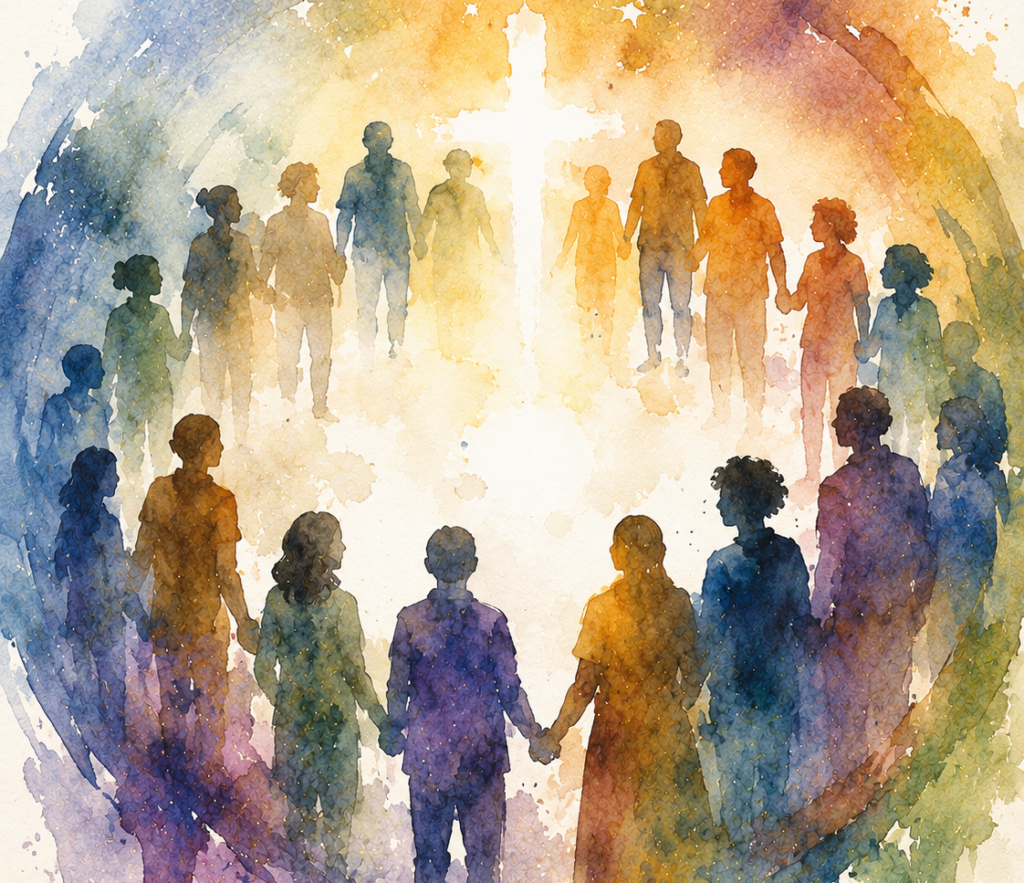
Ephesians 4:1-16
Sometimes we confuse unity with agreement. We imagine that being united means seeing things the same way, sharing the same preferences, or arriving at the same conclusions. It certainly makes life easier when everyone agrees. But Paul offers a very different picture of unity.
In Ephesians 4, he speaks of one body and one Spirit, one hope and one faith. Yet almost immediately, he begins talking about different gifts, different callings, and different ways of serving.
The body is one, but the body is not all the same. A body made entirely of hands would not function very well. Neither would a body made entirely of eyes or feet. The body works because its different parts bring different gifts, strengths, and purposes.
Maybe Christian community is meant to work the same way. Unity does not ask us to erase our differences. It asks us to learn how to live together within them. That can be difficult. Different generations see the world differently. Different life experiences shape our priorities. Different personalities communicate in different ways. Different people encounter God through different traditions, music, prayers, and practices. Sometimes our instinct is to see those differences as problems to solve.
But Paul says that the body grows when “each part is working properly.” Not when every part becomes identical, but when each part is able to bring what it has been given.
Maybe unity is not about making everyone the same, but rather is about becoming curious about one another. Listening before assuming. Making room for voices different from our own. Recognizing that someone else’s gift does not diminish ours. And trusting that the Spirit may be speaking through people we do not fully understand.
This kind of unity requires humility, gentleness, and patience, the very qualities Paul names at the beginning of the chapter.
Because loving people in theory is easy. Learning to live, grow, and serve alongside people who are different from us takes practice.
So maybe the question is not, “How can we get everyone on the same page?” but rather: “How is God bringing all these different pages together into one story?”
The body is one. But thank God, the body is not all the same.
Take some time to sit with Ephesians 4 and use the following questions in your reflection:
- When do you find differences in others most difficult or uncomfortable?
- Are there times when you have confused unity with agreement?
- What gift, perspective, or experience has someone different from you brought into your life?
- How might you practise greater curiosity, humility, or patience with someone this week?
Let’s pray:
God of many gifts, you call us together, not because we are all the same, but because your love is big enough to hold our differences. Give us humility to listen, patience to make room, and curiosity to see your Spirit at work in others. Teach us to value the gifts you have placed in each person, and knit us together in love. May our differences not divide us, but help your body grow. AMEN